



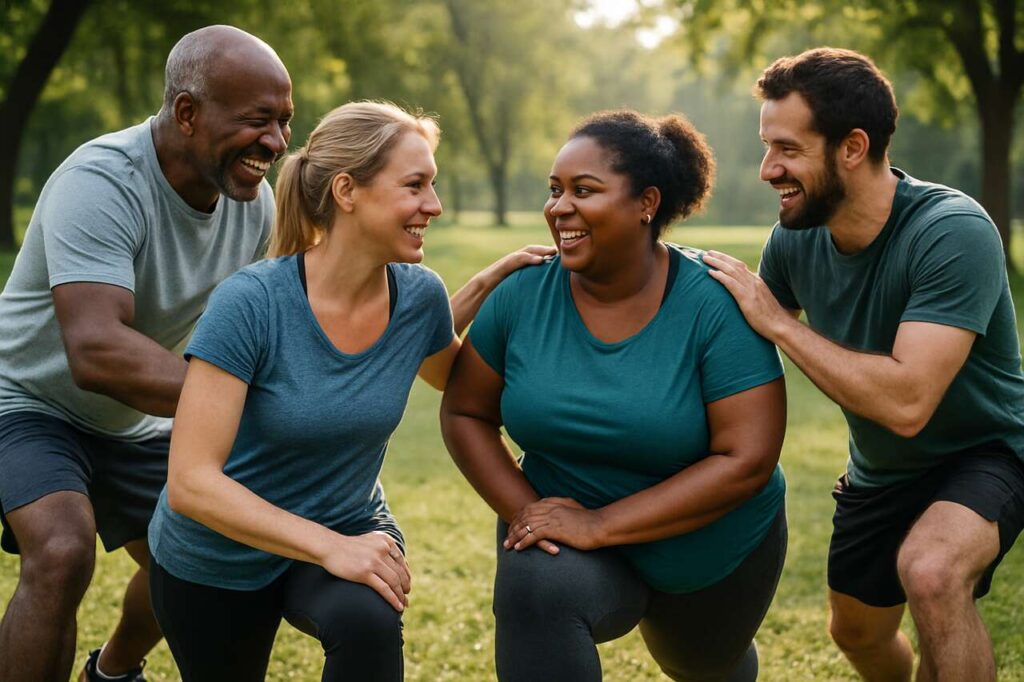
Staying committed to a fitness routine can be challenging when you’re going it alone. The solitary journey of working out often leads to missed sessions, declining motivation, and abandoned goals. However, when exercise becomes a shared experience, something remarkable happens: consistency improves, effort intensifies, and the entire process becomes significantly more enjoyable. The social dimension of fitness transforms physical activity from a chore into an engaging, sustainable lifestyle choice that delivers results far beyond what most individuals achieve in isolation.
The power of group motivation
How collective energy amplifies individual effort
When exercising alongside others, participants experience a phenomenon known as social facilitation, where the presence of fellow exercisers naturally elevates performance levels. This psychological effect creates an environment where effort becomes contagious, pushing individuals to work harder than they would during solo sessions. The collective energy in group fitness classes, running clubs, or team sports generates momentum that carries participants through challenging moments when they might otherwise quit.
Accountability mechanisms in group settings
Group exercise environments establish powerful accountability structures that keep participants showing up consistently. Consider these key accountability factors:
- Scheduled commitments with others create external pressure to attend
- Fellow participants notice absences and check in on missing members
- Pre-paid group classes or team registrations represent financial commitments
- Workout partners depend on your presence for their own motivation
- Instructors and coaches track attendance and progress
These mechanisms work together to create a support network that makes skipping workouts significantly more difficult than when exercising alone. The commitment extends beyond personal willpower to include social obligations that reinforce consistency.
Understanding how group dynamics enhance motivation naturally leads to examining the specific advantages of pursuing fitness objectives with others who share similar aspirations.
The benefits of sharing fitness goals
Creating mutual support systems
When individuals share their fitness goals with others, they establish reciprocal support networks that provide encouragement during difficult periods. These connections offer practical assistance, from sharing workout tips to providing emotional support when progress stalls. Goal-sharing transforms abstract intentions into public commitments, significantly increasing the likelihood of follow-through and achievement.
Learning from diverse experiences and expertise
Group fitness environments bring together people with varying backgrounds, skill levels, and knowledge bases. This diversity creates rich learning opportunities where participants can:
- Discover new exercises and training techniques from peers
- Receive feedback on form and technique
- Learn about nutrition strategies that work for others
- Gain insights into overcoming common obstacles
- Access collective wisdom about equipment, apps, and resources
Tracking progress through shared milestones
Celebrating achievements becomes more meaningful when shared with others pursuing similar objectives. Group settings provide regular opportunities for recognizing progress, whether through completing a challenging class, reaching weight loss targets, or achieving personal records. This collective celebration reinforces positive behaviors and maintains momentum toward long-term goals.
| Solo fitness approach | Social fitness approach |
|---|---|
| Self-evaluation only | Peer feedback and validation |
| Private victories | Shared celebrations |
| Limited perspective | Multiple viewpoints and strategies |
| Self-reliant motivation | Collective encouragement |
The goal-sharing aspect of social fitness naturally strengthens the relationships between participants, creating connections that extend beyond the gym or playing field.
Strengthening social bonds through physical activity
Building friendships through shared challenges
Physical activity creates unique bonding opportunities that differ from typical social interactions. Shared struggle during demanding workouts forges connections based on mutual respect and common experience. These fitness friendships often prove remarkably durable because they’re built on regular interaction, shared values around health, and the vulnerability that comes with pushing physical limits together.
Expanding social networks in health-focused communities
Joining fitness groups opens access to communities centered around wellness and personal improvement. These networks provide social benefits including:
- Meeting like-minded individuals with similar health priorities
- Developing friendships outside work or family circles
- Creating social activities centered on healthy behaviors
- Accessing support during life challenges from understanding peers
- Building professional connections in relaxed, informal settings
Reducing isolation through regular social interaction
Regular group exercise combats loneliness and social isolation, particularly important in an era where remote work and digital communication reduce face-to-face contact. Scheduled fitness activities provide consistent opportunities for meaningful human connection, contributing to improved mental health and overall well-being beyond the physical benefits of exercise itself.
These strengthened social connections naturally introduce an element of friendly competition that further enhances motivation and performance.
Friendly competitiveness as a driving force for progress
Healthy competition versus destructive comparison
When properly channeled, competition in fitness settings becomes a powerful motivator rather than a source of discouragement. Healthy competition focuses on personal improvement inspired by others’ achievements, while avoiding harmful comparisons that undermine self-esteem. Group environments that celebrate individual progress while acknowledging varying fitness levels create the ideal balance for productive competitive energy.
Pushing beyond perceived limitations
Observing others accomplish challenging feats expands personal beliefs about what’s possible. This phenomenon, known as vicarious experience, helps individuals push past self-imposed limitations. When someone in your fitness group completes a difficult exercise or reaches a milestone you thought impossible, it provides concrete evidence that you might achieve similar results with continued effort.
Performance benchmarks through peer comparison
Group settings provide natural performance benchmarks that help individuals gauge progress and set appropriate goals. These comparisons offer valuable information:
| Benchmark type | Motivational benefit |
|---|---|
| Peer performance levels | Realistic goal-setting based on similar individuals |
| Group average metrics | Understanding typical progress timelines |
| Personal ranking within group | Tracking relative improvement over time |
| Team achievements | Contributing to collective success |
This competitive element, combined with social support, creates the foundation for sustained commitment to fitness routines.
Maintaining consistency through collective support
Overcoming motivation dips with group encouragement
Every fitness journey includes periods of low motivation where continuing seems difficult. Group support provides crucial assistance during these challenging phases. When individual motivation wanes, the collective energy and encouragement from fellow participants can bridge the gap, helping people maintain their routines until personal motivation returns. This safety net prevents temporary setbacks from becoming permanent abandonment of fitness goals.
Scheduled commitments that create routine
Group fitness activities establish regular schedules that build sustainable routines. Fixed class times, team practice sessions, or standing appointments with workout partners eliminate daily decision-making about when to exercise. This structure proves particularly valuable because:
- Predetermined schedules reduce procrastination opportunities
- Regular timing helps exercise become an automatic habit
- Consistent scheduling allows planning other activities around workouts
- Routine reduces mental energy required to maintain fitness commitments
Support during plateaus and setbacks
Progress rarely follows a linear path, and plateaus or setbacks can derail solo fitness efforts. Group environments provide perspective and encouragement during these frustrating periods. Experienced members share stories of their own challenges and recoveries, while peers offer emotional support and practical suggestions. This collective wisdom helps individuals navigate obstacles that might otherwise lead to giving up entirely.
Beyond maintaining consistency, the social aspect of fitness fundamentally transforms how participants experience physical activity itself.
Making sports more fun in a team
Transforming exercise from obligation to enjoyment
Social interaction converts exercise from a necessary task into an enjoyable activity that participants actually look forward to. Conversation, laughter, and camaraderie during workouts shift focus away from physical discomfort toward positive social experiences. This transformation proves crucial for long-term adherence, as activities perceived as fun are naturally sustained while those viewed as obligations are eventually abandoned.
Variety through group activities and classes
Group fitness settings offer extensive variety that keeps workouts fresh and engaging. Team sports, group classes, and partner activities provide diverse options including:
- Dance-based fitness classes combining movement with music
- Team sports offering game-based competition and strategy
- Group cycling or running clubs exploring different routes
- Partner workouts incorporating collaborative exercises
- Rotating class formats preventing monotony
Shared experiences that create lasting memories
Group fitness generates memorable experiences that extend beyond simple workout sessions. Participating in charity runs together, celebrating fitness milestones, or simply sharing the triumph of completing a particularly challenging class creates stories and memories that strengthen bonds and enhance overall life satisfaction. These positive associations with exercise reinforce commitment and make fitness an integral part of social identity rather than an isolated health behavior.
The cumulative effect of these social elements creates a powerful framework for achieving and maintaining fitness goals that solitary approaches struggle to match. Exercising with others addresses the fundamental human need for connection while simultaneously improving physical health. The accountability, motivation, support, and enjoyment derived from shared fitness experiences transform exercise from a temporary effort into a sustainable lifestyle. Whether through formal group classes, recreational sports teams, or informal workout partnerships, the social dimension of fitness provides the missing ingredient that helps countless individuals finally achieve the consistency and results they’ve long pursued. By recognizing and embracing the power of collective effort, anyone can leverage social connections to build a healthier, more active life that endures far beyond initial enthusiasm.