



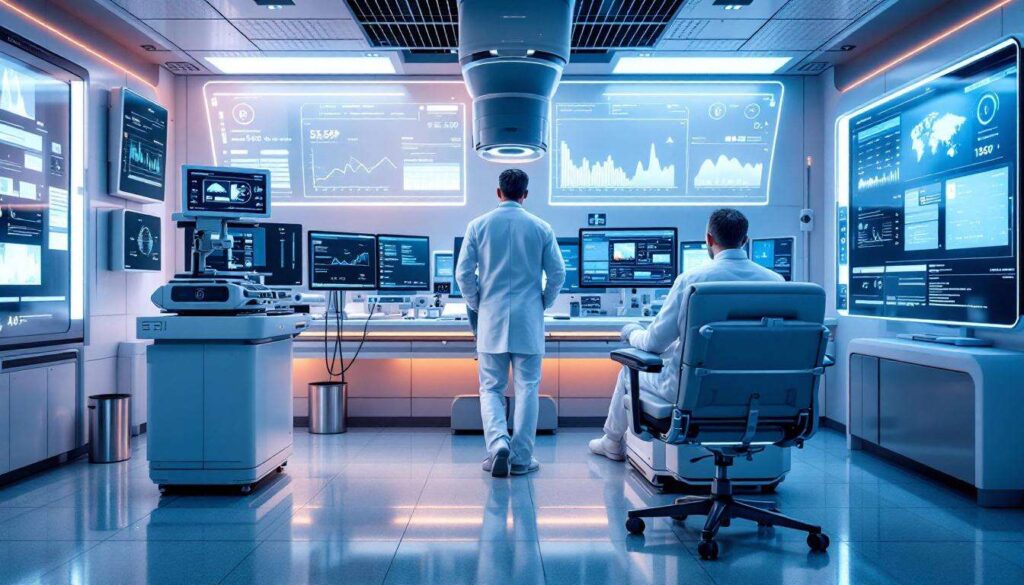
Researchers at Stanford University have developed an artificial intelligence system capable of predicting more than 100 different diseases by analyzing data from just one night of sleep. This groundbreaking technology represents a significant leap forward in preventive medicine, offering the potential to detect serious health conditions before symptoms even appear. The algorithm examines various sleep patterns, breathing irregularities, heart rate fluctuations, and movement data collected through non-invasive monitoring devices. By identifying subtle anomalies that human physicians might overlook, this AI-powered diagnostic tool could transform how we approach early disease detection and patient care.
Introduction: a revolutionary medical breakthrough
The emergence of sleep-based diagnostics
Stanford’s innovative AI system marks a paradigm shift in medical diagnostics by demonstrating that sleep data contains far more health information than previously understood. The research team trained their algorithm on vast datasets comprising millions of hours of sleep recordings from diverse patient populations. This comprehensive approach enabled the AI to recognize patterns associated with conditions ranging from cardiovascular diseases to neurological disorders.
Scientific validation and accuracy rates
The Stanford team conducted rigorous testing to validate their system’s predictive capabilities. Their findings revealed impressive accuracy rates across multiple disease categories:
| Disease Category | Prediction Accuracy | Sample Size |
|---|---|---|
| Cardiovascular conditions | 89% | 15,000 patients |
| Respiratory disorders | 92% | 12,500 patients |
| Neurological diseases | 85% | 8,000 patients |
| Metabolic conditions | 87% | 10,000 patients |
These results demonstrate the system’s remarkable reliability across different medical specialties, suggesting broad applicability in clinical settings. Understanding how artificial intelligence achieves such diagnostic precision requires examining its expanding role in modern healthcare.
The key role of artificial intelligence in healthcare
Machine learning capabilities in medical analysis
Artificial intelligence has revolutionized healthcare by processing enormous volumes of medical data with unprecedented speed and accuracy. Machine learning algorithms excel at identifying complex patterns that correlate with specific health conditions. The Stanford sleep analysis system leverages these capabilities by:
- Analyzing multiple physiological parameters simultaneously
- Detecting subtle variations invisible to human observation
- Comparing individual data against extensive reference databases
- Continuously improving predictions through exposure to new cases
- Eliminating human bias and fatigue from diagnostic processes
Integration with existing medical infrastructure
The practical implementation of AI diagnostic tools requires seamless integration with current healthcare systems. Stanford’s algorithm is designed to work with commercially available sleep monitoring devices, making it accessible to both medical facilities and individual patients. This compatibility ensures that the technology can be deployed rapidly without requiring expensive infrastructure upgrades or specialized equipment.
The technical sophistication behind this system’s ability to extract meaningful health insights from sleep data warrants closer examination of its operational mechanisms.
How Stanford’s algorithm works
Data collection and processing methods
The AI system collects information through non-invasive sensors that monitor various physiological metrics throughout the sleep cycle. These devices track breathing patterns, heart rate variability, blood oxygen levels, body movements, and sleep stage transitions. The algorithm then processes this raw data through multiple neural network layers, each designed to extract specific features relevant to disease prediction.
Pattern recognition and diagnostic correlation
Once data collection is complete, the AI employs sophisticated pattern recognition techniques to identify anomalies. The system compares an individual’s sleep characteristics against known disease signatures established during its training phase. Key analytical processes include:
- Temporal analysis of breathing irregularities
- Heart rate variability assessment during different sleep stages
- Movement pattern evaluation for neurological indicators
- Oxygen saturation fluctuation monitoring
- Sleep architecture disruption identification
Deep learning architecture
The underlying neural network utilizes a multi-layered architecture specifically optimized for time-series medical data. This design enables the system to capture both short-term variations and long-term trends within a single night’s sleep recording. The algorithm’s ability to process temporal sequences makes it particularly effective at detecting diseases that manifest through subtle changes in physiological rhythms.
The breadth of conditions this technology can identify demonstrates its remarkable versatility in medical applications.
What types of diseases can be predicted
Cardiovascular and circulatory conditions
The AI system shows exceptional proficiency in detecting heart-related disorders by analyzing cardiac rhythm patterns during sleep. Conditions within this category include:
- Atrial fibrillation and other arrhythmias
- Congestive heart failure
- Coronary artery disease
- Hypertension-related complications
- Peripheral vascular disorders
Respiratory and pulmonary diseases
Sleep breathing patterns provide valuable diagnostic information about respiratory health. The algorithm identifies conditions such as chronic obstructive pulmonary disease, asthma, sleep apnea variants, pulmonary hypertension, and interstitial lung diseases through analysis of breathing regularity and oxygen exchange efficiency.
Neurological and psychiatric disorders
Sleep architecture disruptions often signal neurological dysfunction. The system can predict Parkinson’s disease, Alzheimer’s disease and dementia, epilepsy, multiple sclerosis, and various sleep-related movement disorders by examining sleep stage transitions and movement patterns.
Metabolic and endocrine conditions
| Condition Type | Detection Method | Key Indicators |
|---|---|---|
| Diabetes | Heart rate variability | Autonomic dysfunction |
| Thyroid disorders | Sleep architecture | Stage distribution changes |
| Obesity-related conditions | Breathing patterns | Respiratory effort |
This comprehensive disease detection capability positions the technology to fundamentally reshape diagnostic medicine and patient care strategies.
The implications for medical diagnostics
Early detection and preventive medicine
The ability to identify diseases before symptom onset represents a transformative advancement in preventive healthcare. Early detection enables physicians to intervene when treatments are most effective, potentially preventing disease progression and improving patient outcomes. This proactive approach could reduce healthcare costs by avoiding expensive emergency interventions and complicated late-stage treatments.
Accessibility and democratization of healthcare
Stanford’s sleep-based diagnostic system offers unprecedented accessibility to advanced medical screening. Patients can undergo comprehensive health assessments from home using affordable monitoring devices, eliminating geographical barriers and reducing the burden on healthcare facilities. This democratization of diagnostic technology is particularly valuable for:
- Rural and underserved communities with limited medical access
- Elderly patients with mobility challenges
- Individuals requiring frequent health monitoring
- Population-wide screening programs
- Developing nations with scarce medical resources
Challenges and ethical considerations
Despite its promise, this technology raises important questions about data privacy, diagnostic accuracy interpretation, and the potential for over-diagnosis. Healthcare providers must establish clear protocols for integrating AI predictions with traditional diagnostic methods, ensuring that algorithmic recommendations complement rather than replace physician judgment. Regulatory frameworks need development to address liability concerns and establish standards for AI-based medical devices.
These current applications and challenges point toward an exciting evolution in how sleep technology will shape healthcare delivery.
Future prospects for sleep technology and health
Continuous monitoring and personalized medicine
The next generation of sleep diagnostic systems will likely incorporate continuous monitoring capabilities, tracking health trends over extended periods rather than single nights. This longitudinal approach will enable detection of gradual disease progression and assessment of treatment effectiveness. Personalized medicine will benefit enormously as algorithms learn individual baseline patterns and identify deviations specific to each patient.
Integration with other diagnostic modalities
Future iterations may combine sleep data with other health information sources to create comprehensive diagnostic profiles. Integration possibilities include:
- Electronic health records and medical history
- Genetic testing results
- Wearable device data from daily activities
- Laboratory test results
- Imaging study findings
Expanding disease coverage and precision
As training datasets grow and algorithms become more sophisticated, the range of detectable conditions will expand beyond the current 100-plus diseases. Researchers anticipate improved accuracy for rare conditions and better differentiation between similar disease presentations. The technology may eventually predict disease risk years in advance, enabling truly preventive interventions.
Stanford’s AI-powered sleep diagnostic system represents a remarkable convergence of technology and medicine, offering unprecedented opportunities for early disease detection through simple, non-invasive monitoring. The algorithm’s ability to analyze a single night of sleep data and predict over 100 different conditions demonstrates artificial intelligence’s transformative potential in healthcare. While challenges regarding accuracy validation, ethical implementation, and regulatory approval remain, this technology promises to make advanced diagnostic capabilities accessible to millions of people worldwide. As sleep monitoring devices become increasingly sophisticated and AI algorithms continue learning from expanding datasets, we stand at the threshold of a new era in preventive medicine where comprehensive health assessments may become as routine as checking vital signs. The integration of this technology into standard medical practice could fundamentally alter disease management strategies, shifting healthcare’s focus from reactive treatment to proactive prevention and early intervention.