



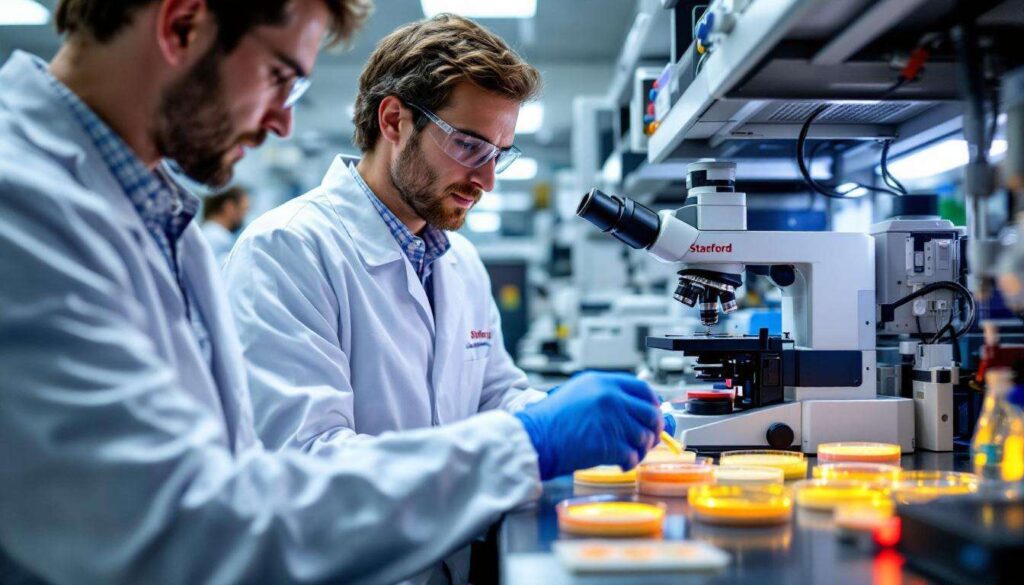
Researchers at Stanford University have achieved a significant medical breakthrough by developing a technique to regenerate cartilage in joints, offering new hope for millions of people suffering from osteoarthritis. This discovery represents a potential turning point in the treatment of degenerative joint conditions, which have long been considered irreversible. The innovative approach focuses on stimulating the body’s natural healing mechanisms to rebuild damaged cartilage tissue, a feat that has eluded medical science for decades.
Groundbreaking discovery at Stanford
The scientific team behind the research
A multidisciplinary team of scientists at Stanford Medicine, led by researchers specializing in regenerative medicine, made this remarkable discovery through years of dedicated investigation. The team combined expertise from orthopedics, molecular biology, and bioengineering to tackle one of medicine’s most challenging problems. Their collaborative approach allowed them to examine cartilage regeneration from multiple scientific perspectives, ultimately identifying a novel pathway that could reverse joint deterioration.
Understanding the cartilage regeneration mechanism
The Stanford scientists discovered that specific skeletal stem cells possess the remarkable ability to regenerate cartilage when properly activated. These cells, which reside in bone marrow, can be triggered through a carefully designed process that involves:
- Microfracture surgery to create small injuries in the bone
- Application of bone morphogenetic protein 2 (BMP2) to stimulate stem cell activity
- Targeted manipulation of cellular signaling pathways
- Controlled inflammation to enhance regenerative responses
The research revealed that the combination of these elements creates an optimal environment for cartilage formation, essentially reversing the degenerative process that characterizes arthritis. This understanding of the biological mechanisms involved sets the foundation for developing practical therapeutic applications.
The researchers’ innovative method
The two-step treatment protocol
The Stanford team developed a two-phase approach that maximizes cartilage regeneration. The first phase involves a minimally invasive surgical procedure where tiny fractures are created in the bone beneath the damaged cartilage. This controlled injury activates the body’s healing response and mobilizes skeletal stem cells to the affected area. The second phase introduces specific growth factors that direct these stem cells to form new cartilage rather than scar tissue.
Advantages over existing treatments
Traditional arthritis treatments have focused primarily on managing symptoms rather than addressing the underlying tissue damage. The Stanford method offers several distinct advantages compared to conventional approaches:
| Treatment Type | Cartilage Regeneration | Long-term Effectiveness | Invasiveness |
|---|---|---|---|
| Traditional medication | None | Temporary relief | Non-invasive |
| Joint replacement | None | 10-15 years | Highly invasive |
| Stanford method | Yes | Potentially permanent | Minimally invasive |
This innovative technique addresses the root cause of joint deterioration by actually rebuilding damaged tissue, offering a fundamentally different solution to arthritis management. The method’s ability to stimulate natural regeneration processes represents a paradigm shift in orthopedic medicine.
Implications for arthritis
Impact on osteoarthritis progression
Osteoarthritis affects over 32 million adults in the United States alone, making it one of the most common chronic conditions. The disease progressively destroys joint cartilage, leading to pain, stiffness, and reduced mobility. The Stanford discovery could fundamentally alter the disease trajectory by halting or even reversing cartilage loss. Early intervention with this regenerative technique might prevent the severe joint damage that typically necessitates complete joint replacement surgery.
Addressing the limitations of current therapies
Current arthritis treatments face significant limitations that this new approach could overcome. Pain medications provide only symptomatic relief without addressing tissue damage, while corticosteroid injections offer temporary benefits but can accelerate cartilage degradation with repeated use. Physical therapy helps maintain function but cannot regenerate lost tissue. The Stanford method fills a critical gap by offering actual tissue restoration, potentially eliminating the need for these palliative measures in many patients.
Potential benefits for patients
Quality of life improvements
Patients who could benefit from this cartilage regeneration technique may experience dramatic improvements in their daily lives. The restoration of healthy cartilage could eliminate chronic pain, restore normal joint function, and allow individuals to return to activities they had abandoned due to arthritis. These benefits extend beyond physical health to encompass:
- Increased independence in performing daily tasks
- Reduced reliance on pain medications and their side effects
- Enhanced mental health through pain relief and restored mobility
- Ability to maintain employment and productive activities
- Improved sleep quality uninterrupted by joint pain
Economic and healthcare system advantages
The broader implementation of this regenerative approach could yield substantial economic benefits for both patients and healthcare systems. Joint replacement surgeries cost between $30,000 and $50,000 per procedure, with hundreds of thousands performed annually. A less invasive regenerative treatment could significantly reduce these expenses while also decreasing recovery times, hospital stays, and rehabilitation needs. The potential to prevent arthritis progression could save billions in long-term healthcare costs.
Steps toward commercialization
Clinical trial requirements
Before this treatment becomes widely available, it must undergo rigorous clinical testing to establish safety and efficacy. The researchers are currently planning multi-phase trials that will evaluate the technique in progressively larger patient populations. These trials will assess optimal dosing protocols, identify suitable patient candidates, and monitor long-term outcomes. The process typically requires several years of data collection and regulatory review before approval for general use.
Regulatory pathway and timeline
The treatment must receive approval from the Food and Drug Administration before becoming available to patients outside clinical trials. The regulatory process involves submitting comprehensive data demonstrating that the therapy is both safe and effective. Given the innovative nature of this approach, the FDA may designate it as a breakthrough therapy, potentially accelerating the review timeline. Experts estimate that widespread clinical availability could occur within five to ten years, depending on trial results and regulatory proceedings.
Future perspectives and upcoming research
Expanding applications beyond arthritis
The principles underlying this cartilage regeneration technique may extend to other degenerative conditions affecting connective tissues. Researchers are exploring whether similar stem cell activation methods could repair damaged tendons, ligaments, and intervertebral discs. The success of this approach in cartilage regeneration has opened new avenues for treating sports injuries, spinal degeneration, and other musculoskeletal disorders that currently lack effective regenerative treatments.
Ongoing research initiatives
The Stanford team continues to refine their technique and explore complementary strategies to enhance cartilage regeneration. Current research focuses on optimizing growth factor delivery, identifying genetic markers that predict treatment response, and developing non-surgical methods to activate skeletal stem cells. Collaborative efforts with other institutions are examining how this approach might combine with emerging technologies like gene therapy and tissue engineering to further improve outcomes.
The Stanford discovery of a method to regenerate cartilage represents a major advancement in treating arthritis and degenerative joint disease. Through innovative use of skeletal stem cells and growth factors, researchers have demonstrated the possibility of reversing cartilage damage rather than merely managing symptoms. This breakthrough offers hope for millions of patients suffering from osteoarthritis, potentially preventing the need for joint replacement surgery and significantly improving quality of life. While clinical trials and regulatory approval remain necessary steps before widespread availability, the foundational science behind this technique marks a transformative moment in regenerative medicine with implications extending far beyond arthritis treatment.