



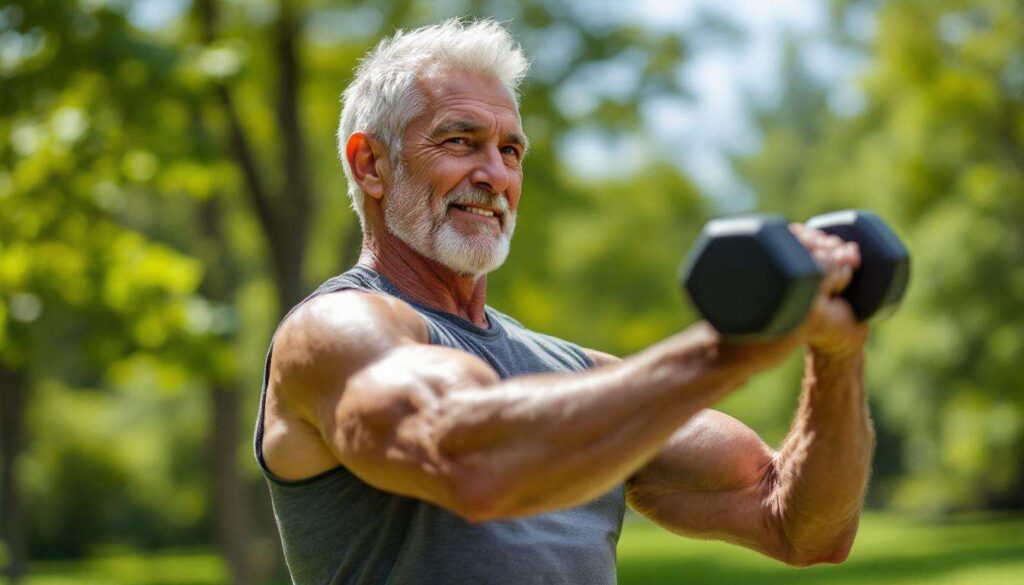
Aging brings inevitable changes to the body, but losing strength and independence doesn’t have to be part of the equation. For individuals over 50, maintaining muscle mass, bone density, and functional mobility becomes increasingly critical. Strength training offers a powerful solution, and contrary to popular belief, it doesn’t require a gym full of equipment. A single dumbbell can provide everything needed for a comprehensive workout that preserves vitality, enhances daily functioning, and supports long-term health. This accessible approach to fitness empowers older adults to take control of their physical well-being with minimal investment and maximum results.
The importance of strength training after 50
Understanding age-related muscle loss
Sarcopenia, the natural decline of muscle mass with age, accelerates significantly after the fifth decade of life. Research indicates that adults can lose between 3% to 8% of their muscle mass per decade after age 30, with the rate increasing after 60. This progressive loss affects not only physical appearance but also metabolic health, bone density, and the ability to perform everyday tasks independently.
Benefits beyond muscle building
Strength training delivers comprehensive health advantages for older adults:
- Bone density preservation: resistance exercises stimulate bone formation and slow osteoporosis progression
- Metabolic enhancement: increased muscle mass elevates resting metabolic rate and improves blood sugar regulation
- Fall prevention: improved balance, coordination, and proprioception reduce fall risk by up to 40%
- Cognitive function: regular resistance training supports brain health and may delay cognitive decline
- Chronic disease management: helps control arthritis symptoms, heart disease risk factors, and diabetes
Functional strength for daily living
The primary goal of strength training after 50 extends beyond aesthetics. Functional fitness focuses on movements that mirror daily activities: rising from chairs, climbing stairs, carrying groceries, and maintaining balance. These practical applications directly translate to sustained independence and quality of life. Understanding these benefits sets the foundation for selecting appropriate training tools.
Choosing the right equipment for an effective workout
Why a single dumbbell works
A single dumbbell offers unique advantages for older adults. Unlike barbells or machines, one dumbbell creates unilateral training opportunities that address muscle imbalances while engaging core stabilizers. The asymmetric load challenges balance and coordination in ways that bilateral exercises cannot replicate. This approach also proves economical, space-efficient, and less intimidating than complex gym equipment.
Selecting the appropriate weight
Choosing the correct dumbbell weight requires balancing challenge with safety. Consider these guidelines:
| Exercise Type | Recommended Weight Range | Notes |
|---|---|---|
| Lower body exercises | 15-35 lbs | Larger muscle groups tolerate heavier loads |
| Upper body pressing | 8-20 lbs | Shoulder-focused movements require lighter weights |
| Carries and holds | 20-40 lbs | Grip strength often limits duration rather than weight |
Beginners should start conservatively, selecting a weight that allows proper form for 8-10 repetitions with the last two feeling challenging but manageable.
Additional considerations
Beyond weight, dumbbell selection involves grip comfort, coating material for secure handling, and adjustable options for progression. Hexagonal dumbbells prevent rolling during floor exercises, while rubber-coated versions protect flooring and reduce noise. These practical considerations ensure consistent, safe training sessions. With equipment selected, attention turns to the specific movements that deliver results.
Key exercises to strengthen the whole body
Goblet squat for lower body power
The goblet squat targets quadriceps, glutes, hamstrings, and core muscles simultaneously. Holding the dumbbell at chest height encourages upright posture and proper squat mechanics. This foundational movement pattern directly improves chair-rising ability and stair climbing. The vertical dumbbell position also provides a counterbalance that many older adults find helpful for maintaining balance during the descent and ascent phases.
Goblet lateral lunge for hip mobility
Lateral lunges address the often-neglected frontal plane of movement. This exercise strengthens hip abductors and adductors while improving lateral stability crucial for preventing sideways falls. The goblet position maintains torso alignment and distributes load safely across the lower body. Regular practice enhances hip flexibility and reinforces movement patterns used when stepping sideways or changing direction quickly.
Romanian deadlift for posterior chain
This hip-hinge movement strengthens the entire posterior chain: hamstrings, glutes, lower back, and grip. The Romanian deadlift teaches proper bending mechanics that protect the spine during daily activities like picking up objects. Maintaining a neutral spine throughout the movement develops postural muscles that combat the forward-leaning tendency common with aging.
Seated one-arm shoulder press for upper body strength
Performing shoulder presses seated eliminates lower body compensation and isolates shoulder and arm muscles. The single-arm variation creates rotational core demands while building overhead pressing strength essential for reaching high shelves. Alternating arms also reveals and addresses strength imbalances between dominant and non-dominant sides.
Suitcase carry for functional strength
The suitcase carry mimics carrying groceries or luggage while intensely engaging core stabilizers, grip strength, and postural muscles. Walking with an offset load challenges balance and trains the body to resist lateral flexion. This exercise builds real-world carrying capacity and endurance that directly transfers to daily tasks. These five movements form the foundation of an effective training routine.
Single-dumbbell workout routine
The complete circuit structure
This workout follows a circuit format, performing all exercises consecutively before resting:
- Goblet squat: 10 repetitions
- Goblet lateral lunge: 5 repetitions per side
- Romanian deadlift: 10 repetitions
- Seated one-arm shoulder press: 5 repetitions per arm
- Suitcase carry: 20-30 seconds per side
Complete 3 to 5 rounds total, resting 1 to 2 minutes between circuits. The entire session requires approximately 20-30 minutes, making it practical for busy schedules.
Progression strategies
Advancement occurs through multiple variables: increasing repetitions, adding circuit rounds, reducing rest periods, or progressing to heavier weights. Prioritize form quality over quantity throughout progression. A well-executed set of 8 repetitions surpasses 12 repetitions performed with compromised technique. Track workouts in a simple notebook to monitor improvements and maintain accountability.
Frequency and recovery
Perform this routine 2 to 3 times weekly on non-consecutive days, allowing 48 hours between sessions for muscle recovery. Older adults may require extended recovery periods compared to younger individuals. Listen to body signals and adjust frequency accordingly. Complementing strength sessions with walking, swimming, or flexibility work creates a balanced fitness program. Understanding proper execution prepares exercisers to train safely.
Safety tips to avoid injuries
Pre-workout preparation
Begin each session with a 5-10 minute warm-up incorporating light cardiovascular activity and dynamic stretching. Arm circles, leg swings, and bodyweight squats prepare joints and muscles for loaded movements. Never begin strength training with cold muscles, as this significantly increases injury risk, particularly for older adults with reduced tissue elasticity.
Form fundamentals
Proper technique supersedes all other training variables. Key principles include:
- Maintain neutral spine alignment throughout all movements
- Control both lifting and lowering phases with deliberate tempo
- Breathe consistently, exhaling during exertion phases
- Keep movements within pain-free ranges of motion
- Engage core muscles before initiating each repetition
When to seek guidance
Consult healthcare providers before beginning any new exercise program, especially when managing chronic conditions, recent injuries, or taking medications affecting balance or bone density. Working with a qualified fitness professional for initial sessions ensures proper form and appropriate exercise modifications. Stop immediately if experiencing sharp pain, dizziness, or unusual discomfort and seek professional evaluation. Safe training practices support long-term adherence.
Maintaining motivation and progression
Setting realistic goals
Establish specific, measurable objectives beyond vague aspirations. Rather than “get stronger,” target concrete achievements like “increase goblet squat repetitions from 8 to 12” or “carry groceries without assistance.” Short-term goals (4-6 weeks) maintain focus while long-term objectives (6-12 months) provide direction. Celebrate incremental victories to sustain enthusiasm throughout the fitness journey.
Creating accountability systems
Schedule workouts as non-negotiable appointments. Training with a partner or joining senior fitness groups adds social accountability and enjoyment. Tracking progress through workout logs or fitness apps provides tangible evidence of improvement. Sharing goals with family members creates external support networks that encourage consistency during motivation lapses.
Adapting to challenges
Expect fluctuations in energy, capability, and motivation. Modify workouts during low-energy periods rather than skipping entirely. Reduced repetitions, lighter weights, or fewer circuits maintain habit consistency even when performance dips. Consistency trumps perfection in long-term fitness success. Periodically reassess goals and adjust programming to prevent plateaus and maintain engagement.
Strength training with a single dumbbell provides older adults an accessible, effective method for preserving independence and vitality. The five-exercise circuit addresses all major muscle groups while requiring minimal equipment and time investment. Prioritizing proper form, progressive overload, and consistent practice delivers measurable improvements in functional strength, balance, and overall health. By incorporating these evidence-based exercises into regular routines, individuals over 50 can maintain the physical capabilities necessary for active, independent living well into their later years.