



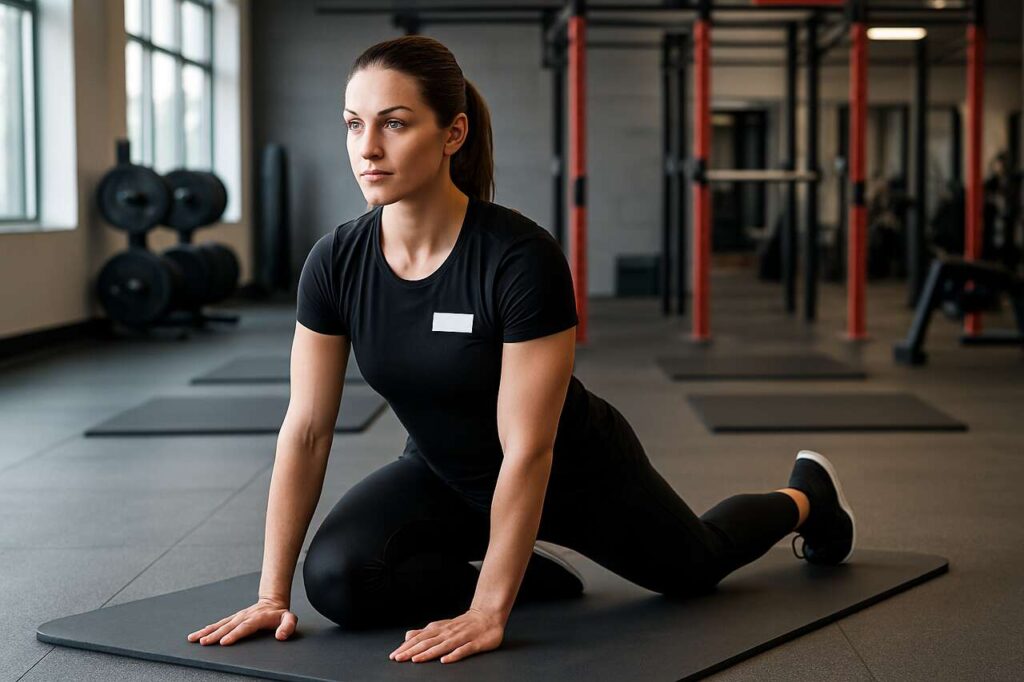
As a certified trainer, the irony isn’t lost on me: I spend my days helping clients improve their flexibility and mobility, yet my own hips often feel locked and uncomfortable. Despite understanding the biomechanics and having access to countless exercises, I’ve struggled with persistent hip stiffness that affects everything from my workouts to how I move throughout the day. This personal challenge led me on a journey to find a solution that actually works, and I discovered one movement that transformed how my hips feel. The relief was so profound that it became a non-negotiable part of my daily routine, proving that sometimes the simplest approaches yield the most remarkable results.
Understanding stiff hips
The anatomy behind the discomfort
The hip joint represents one of the body’s most complex structures, functioning as a ball-and-socket joint that allows for an impressive range of motion. This joint connects the femur to the pelvis and is surrounded by multiple layers of muscles, tendons, and ligaments. When these tissues become tight or restricted, the entire kinetic chain suffers. The hip flexors, glutes, adductors, and external rotators all play crucial roles in maintaining proper hip function.
Stiffness occurs when these muscles and connective tissues lose their elasticity and pliability. The joint capsule itself can become restricted, limiting the natural gliding motion that should occur during movement. This restriction doesn’t just affect the hips in isolation; it creates compensatory patterns throughout the body, forcing other joints and muscles to work harder than they should.
How stiffness manifests
Hip stiffness presents itself in various ways that extend beyond simple discomfort:
- Difficulty bending forward to tie shoes or pick up objects
- Limited range of motion during exercises like squats or lunges
- Tightness when crossing legs or sitting for extended periods
- Discomfort when transitioning from sitting to standing
- Reduced stride length during walking or running
These symptoms often develop gradually, making them easy to dismiss until they significantly impact daily activities. Understanding these manifestations helps identify the problem early, allowing for timely intervention before chronic issues develop.
Common causes of stiffness
Sedentary lifestyle factors
Modern life has created an epidemic of hip stiffness, with prolonged sitting serving as the primary culprit. When we sit for hours at desks, in cars, or on couches, our hip flexors remain in a shortened position. This constant flexion causes these muscles to adapt by becoming chronically tight, pulling the pelvis forward and creating an anterior pelvic tilt that affects posture and movement patterns.
| Activity | Average daily hours | Impact on hips |
|---|---|---|
| Office work | 8-10 hours | High |
| Commuting | 1-2 hours | Moderate |
| Leisure sitting | 3-4 hours | Moderate |
Training and overuse patterns
Paradoxically, even active individuals experience hip stiffness. Repetitive movement patterns without adequate recovery or stretching create muscle imbalances. Runners often develop tight hip flexors and weak glutes, while cyclists experience shortened hip flexors from the constant pedaling motion. Strength training without proper mobility work compounds these issues, building strength on top of existing restrictions.
Age and lifestyle factors
Additional contributors to hip stiffness include:
- Natural loss of tissue elasticity with aging
- Previous injuries that create protective muscle guarding
- Dehydration affecting tissue quality
- Stress causing chronic muscle tension
- Poor sleep quality limiting recovery
These factors often work in combination, creating a compound effect that makes hip stiffness particularly stubborn to address.
The importance of hip mobility
Impact on overall movement quality
Hip mobility serves as the foundation for virtually every movement pattern we perform. The hips act as the body’s central power generator, transferring force between the upper and lower body. When hip mobility is compromised, this power transfer becomes inefficient, forcing other joints to compensate. The lower back often bears the brunt of this compensation, leading to pain and potential injury.
Adequate hip mobility allows for proper squat depth, efficient walking and running mechanics, and the ability to bend and rotate without restriction. It enables athletes to generate power, helps prevent falls in older adults, and allows everyone to move through daily activities with ease and confidence.
Connection to pain and injury prevention
Research consistently demonstrates the link between limited hip mobility and various musculoskeletal issues. Restricted hip movement forces the lumbar spine to compensate during bending and lifting, increasing stress on spinal discs and facet joints. The knees also suffer when hips can’t move properly, as they’re forced into awkward positions during activities like climbing stairs or squatting.
Performance and quality of life benefits
Beyond injury prevention, optimal hip mobility enhances:
- Athletic performance across all sports and activities
- Posture and spinal alignment
- Balance and stability during movement
- Energy efficiency during daily activities
- Overall comfort and ease of movement
The ripple effects of improved hip mobility extend far beyond the joint itself, influencing how the entire body functions and feels.
The groundbreaking method to unlock hips
Discovering the 90/90 hip stretch
After trying countless stretches and mobility drills, I found the answer in the 90/90 hip stretch. This deceptively simple position addresses multiple aspects of hip mobility simultaneously, targeting both internal and external rotation while providing a deep stretch to the hip capsule itself. Unlike many stretches that focus on a single plane of motion, this movement works the hips in a functional, multi-dimensional way.
How to perform the movement correctly
Proper execution is crucial for maximum benefit:
- Sit on the floor with both knees bent at 90-degree angles
- Position the front leg with the shin parallel to your body
- Place the back leg with the shin perpendicular to your body
- Keep both sit bones grounded on the floor
- Maintain an upright torso with neutral spine
- Lean forward over the front leg to deepen the stretch
- Hold for 60-90 seconds before switching sides
The beauty of this stretch lies in its adjustability. Beginners can sit more upright, while advanced practitioners can fold deeply forward, creating progressive overload for flexibility gains.
Why this movement works
The 90/90 position uniquely targets the hip joint capsule and surrounding musculature. It simultaneously stretches the external rotators of the front leg while addressing the internal rotators of the back leg. This bilateral approach creates balance, addressing the asymmetries that develop from daily life and training patterns. The position also encourages proper pelvic alignment, teaching the body what neutral positioning feels like.
The benefits for the body
Immediate and long-term improvements
The effects of consistent practice become apparent quickly. Within the first week, most people notice increased ease of movement and reduced discomfort during daily activities. The hips feel less locked, and movements that previously caused pinching or restriction become smoother. Over weeks and months, these improvements compound, leading to significant increases in range of motion and functional capacity.
| Timeframe | Expected improvements |
|---|---|
| 1-2 weeks | Reduced stiffness, easier movement |
| 4-6 weeks | Noticeable range of motion gains |
| 3+ months | Significant mobility improvements, pain reduction |
Systemic effects throughout the body
Improved hip mobility creates a cascade of positive changes. Lower back pain often diminishes as the hips take on their proper role in movement. Knee discomfort may resolve as proper alignment is restored. Even shoulder and neck tension can improve, as the body no longer needs to compensate for restricted hips. Better posture emerges naturally when the hips can move freely, allowing the pelvis to find its optimal position.
Enhanced athletic and daily performance
The functional benefits extend to every aspect of physical activity:
- Deeper, more stable squats with better form
- Improved running efficiency and stride length
- Greater power generation in sports movements
- Reduced fatigue during prolonged standing or walking
- Better balance and coordination
Incorporating this practice into your daily routine
Creating consistency
The key to lasting change lies in daily practice. I perform the 90/90 stretch every evening while watching television or winding down before bed. This approach removes barriers by integrating the movement into existing routines rather than requiring dedicated time. Even five minutes daily produces better results than longer, sporadic sessions.
Progressive implementation strategies
Start conservatively and build gradually:
- Week one: hold each side for 30 seconds, focus on proper positioning
- Week two: increase to 60 seconds per side, begin gentle forward leans
- Week three: extend to 90 seconds, deepen the forward fold
- Week four and beyond: maintain 90 seconds, explore variations
This progressive approach allows tissues to adapt safely while building the habit. Patience and consistency trump aggressive stretching that risks injury or burnout.
Complementary practices
While the 90/90 stretch serves as the cornerstone, supporting it with additional practices enhances results. Light hip circles before the stretch prepare the joint, while gentle strengthening exercises afterward help stabilize newly gained range of motion. Staying hydrated and getting adequate sleep support tissue recovery and adaptation.
Hip mobility isn’t a destination but an ongoing practice that requires attention and care. The 90/90 stretch provided the breakthrough I needed, transforming my stiff, uncomfortable hips into mobile, functional joints that support rather than limit my movement. This single practice has proven that even professionals dealing with persistent issues can find relief through consistent, targeted effort. The investment of a few minutes daily yields returns that enhance every aspect of physical function, proving that sometimes the most effective solutions are elegantly simple.