

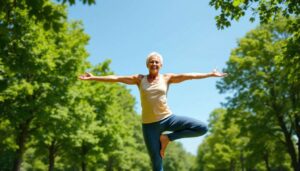

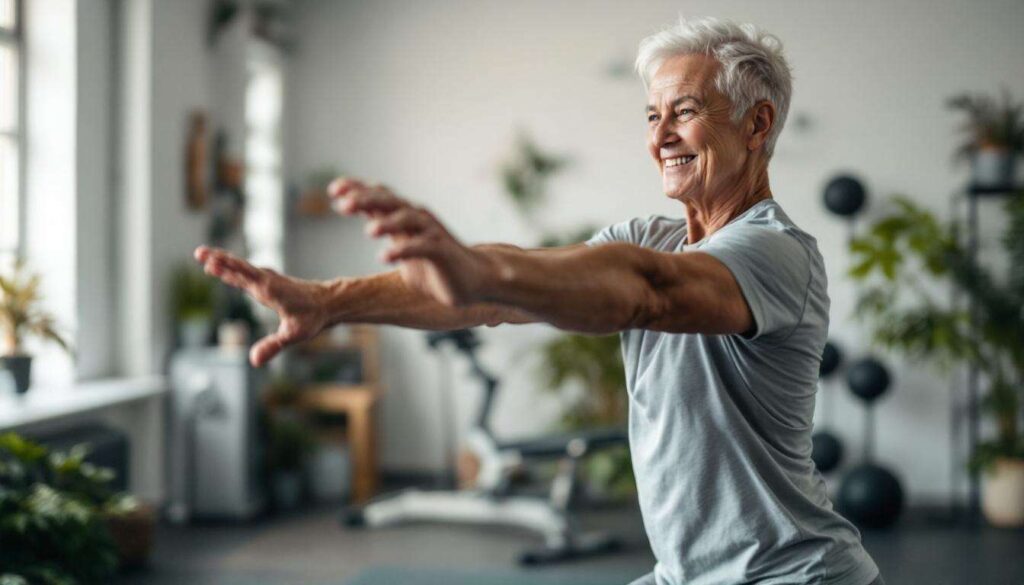
Physical fitness after sixty becomes a defining marker of overall health and longevity. Many people assume that aging naturally leads to declining strength and mobility, but research consistently shows that targeted exercise can reverse or prevent much of this decline. Standing exercises, in particular, offer a practical and effective way to maintain functional fitness. If you can master four specific standing exercises at sixty, you demonstrate a level of fitness that surpasses many individuals a decade younger. These movements test balance, coordination, strength, and flexibility simultaneously, providing a comprehensive assessment of your physical capabilities.
The importance of standing exercises at 60
Why standing movements matter more as we age
Standing exercises become increasingly valuable after sixty because they mimic real-world movements that we perform daily. Unlike machine-based exercises that isolate specific muscles, standing movements require the coordination of multiple muscle groups while maintaining balance. This functional approach to fitness translates directly to activities like climbing stairs, carrying groceries, or getting up from a chair. The ability to perform these exercises indicates that your body retains the neuromuscular coordination necessary for independent living.
Research published in various gerontology journals demonstrates that individuals who regularly perform standing exercises experience fewer falls and maintain independence longer than their sedentary peers. The exercises challenge your proprioception, which is your body’s awareness of its position in space. This sensory system naturally declines with age, but consistent practice can slow or even reverse this deterioration.
The four exercises that define fitness at sixty
The four standing exercises that serve as benchmarks include:
- Single-leg balance hold: standing on one leg for at least thirty seconds without support
- Standing hip abduction: lifting one leg to the side while maintaining upright posture for ten repetitions per side
- Heel-to-toe walk: walking in a straight line with the heel of one foot touching the toes of the other for at least ten steps
- Standing torso rotation: rotating the upper body while keeping hips stable, ten repetitions in each direction
These movements collectively assess the key components of functional fitness. Mastering them at sixty indicates that your physical capabilities rival or exceed those of many fifty-year-olds who haven’t prioritized their fitness. Understanding how these exercises benefit specific aspects of health helps motivate consistent practice.
The benefits of maintaining balance and coordination
How balance exercises protect against falls
Balance deterioration represents one of the most significant health risks for older adults. Falls account for a substantial percentage of hospitalizations and loss of independence in people over sixty. Single-leg balance exercises directly address this vulnerability by strengthening the stabilizing muscles in the ankles, knees, and hips. When you stand on one leg, your body constantly makes micro-adjustments to maintain equilibrium, training the vestibular system and improving reaction time.
The heel-to-toe walk challenges balance in a dynamic context, requiring continuous adjustment as your center of gravity shifts with each step. This exercise particularly benefits the cerebellum, the brain region responsible for coordinating movement. Regular practice creates new neural pathways that enhance overall coordination.
Coordination benefits beyond fall prevention
Improved coordination extends benefits far beyond preventing falls. Enhanced neuromuscular control allows for more fluid, efficient movement patterns in all activities. People who maintain excellent coordination often report:
- Greater confidence in physical activities
- Improved reaction times in unexpected situations
- Better spatial awareness in crowded environments
- Enhanced ability to multitask while moving
These advantages contribute to a higher quality of life and greater willingness to remain physically active. The confidence gained from mastering balance exercises often motivates people to pursue additional physical challenges. Building on this foundation, targeted strength work amplifies these benefits even further.
Strengthening muscles with targeted exercises
Muscle groups activated during standing exercises
Standing exercises engage multiple muscle groups simultaneously, providing comprehensive strength training without requiring equipment. The single-leg balance primarily targets the gluteus medius, a critical hip stabilizer that often weakens with age. This muscle prevents the pelvis from tilting when walking or standing on one leg, and its weakness contributes significantly to gait abnormalities and fall risk.
Standing hip abduction specifically isolates and strengthens the hip abductors, including the gluteus medius and minimus. These muscles are essential for lateral stability and maintaining proper alignment during walking. The standing torso rotation engages the oblique abdominal muscles and spinal stabilizers, which support the trunk and protect the lower back.
| Exercise | Primary Muscles | Secondary Benefits |
|---|---|---|
| Single-leg balance | Gluteus medius, ankle stabilizers | Core engagement, proprioception |
| Hip abduction | Hip abductors, gluteus medius | Pelvic stability, lateral strength |
| Heel-to-toe walk | Calves, anterior tibialis, core | Dynamic balance, gait improvement |
| Torso rotation | Obliques, spinal erectors | Spinal mobility, back protection |
Progressive strength gains over time
The beauty of these exercises lies in their scalability. Beginners can perform them near a wall or chair for support, gradually reducing assistance as strength improves. Advanced practitioners can add challenges like closing their eyes during balance exercises or holding light weights during hip abductions. This progressive overload principle ensures continuous improvement regardless of starting fitness level.
Muscle strength directly correlates with metabolic health, bone density, and functional independence. Maintaining muscle mass after sixty requires consistent stimulus, and these standing exercises provide exactly that. As muscles strengthen, the supporting structures around joints also benefit from increased stability.
Keeping joints flexible and healthy
Joint health through controlled movement
Joint flexibility naturally declines with age due to changes in connective tissue and reduced synovial fluid production. However, regular movement through full ranges of motion can maintain or even improve joint health. The standing exercises described here move the hips, ankles, knees, and spine through functional ranges that support daily activities.
The standing torso rotation particularly benefits spinal health by maintaining mobility in the thoracic spine, which often becomes rigid with age and poor posture habits. This rotational movement lubricates the facet joints between vertebrae and stretches the connective tissues that can otherwise tighten and restrict movement.
Preventing arthritis progression
While exercise cannot cure arthritis, appropriate movement can significantly slow its progression and reduce symptoms. The key is choosing exercises that strengthen supporting muscles without placing excessive stress on damaged cartilage. Standing exercises generally qualify as joint-friendly because they:
- Use body weight as resistance, avoiding excessive load
- Promote synovial fluid circulation, which nourishes cartilage
- Strengthen muscles that reduce joint stress during movement
- Maintain range of motion that prevents compensatory movement patterns
People with knee or hip arthritis often find that consistent practice of these exercises reduces pain and improves function over time. The increased stability from stronger muscles reduces the abnormal forces that accelerate cartilage breakdown. Beyond joint health, these exercises also address another common concern: posture.
Improving posture and enhancing stability
The posture-stability connection
Posture and stability form an interconnected system that determines how efficiently you move and how much energy daily activities require. Poor posture shifts your center of gravity, forcing certain muscles to work harder while others weaken from disuse. This imbalance increases fall risk and contributes to chronic pain, particularly in the neck, shoulders, and lower back.
The standing exercises described here naturally promote better posture by strengthening the muscles responsible for maintaining alignment. The single-leg balance requires upright posture to succeed, providing immediate feedback when you slouch or lean. The torso rotation exercise specifically targets the muscles that prevent forward head posture and rounded shoulders, two of the most common postural problems in older adults.
Long-term postural improvements
Consistent practice of standing exercises creates lasting postural changes by retraining movement patterns. As the deep core stabilizers strengthen, maintaining good posture requires less conscious effort. People often report that they naturally stand taller and move with greater confidence after several weeks of regular practice.
Improved posture also enhances breathing efficiency by allowing the diaphragm to move freely. This increased oxygen delivery improves energy levels and cognitive function. The stability gained from these exercises reduces the compensatory movements that often develop when people feel unsteady, creating a more efficient and graceful movement quality. Making these exercises a regular habit requires practical strategies that fit into daily life.
Tips for incorporating these exercises into your daily routine
Creating a sustainable practice schedule
The most effective exercise program is one you actually follow consistently. Rather than attempting hour-long workout sessions, integrate these standing exercises into existing daily routines. Many people successfully practice them during commercial breaks while watching television, while waiting for coffee to brew, or immediately after brushing teeth in the morning.
Start with modest goals: perform each exercise for just thirty seconds daily. This minimal time investment builds the habit without creating resistance. As the routine becomes automatic, gradually increase duration and difficulty. Consistency matters far more than intensity, especially when building foundational fitness after sixty.
Practical implementation strategies
Consider these approaches for making standing exercises a permanent part of your routine:
- Use environmental cues: place a small marker or note where you’ll see it regularly as a reminder
- Pair with existing habits: always practice after an established activity like breakfast
- Track progress: keep a simple log of how long you can hold balances or how many repetitions you complete
- Practice with others: exercising with a partner or group increases accountability and enjoyment
- Modify as needed: use a countertop or chair back for support when beginning, gradually reducing assistance
Safety considerations and progression
Always prioritize safety when practicing balance exercises. Keep a stable surface within reach, especially when first learning these movements. Wear supportive, flat-soled shoes or practice barefoot on a non-slip surface. If you experience dizziness, sharp pain, or unusual symptoms, consult a healthcare provider before continuing.
Progress gradually by increasing difficulty only after mastering the basic version of each exercise. For example, once you can comfortably hold a single-leg balance for sixty seconds with eyes open, try closing your eyes for brief periods. This progression ensures continued improvement while minimizing injury risk.
Mastering these four standing exercises at sixty demonstrates exceptional functional fitness that many younger individuals lack. The single-leg balance, standing hip abduction, heel-to-toe walk, and standing torso rotation collectively assess and improve balance, coordination, strength, flexibility, posture, and stability. Regular practice of these movements reduces fall risk, maintains independence, and enhances overall quality of life. The exercises require no equipment and can be performed almost anywhere, making them accessible regardless of circumstances. By dedicating just a few minutes daily to these fundamental movements, sixty-year-olds can achieve and maintain fitness levels that exceed those of many people a decade younger. The key lies in consistent practice, gradual progression, and integration into daily routines. Physical capability at sixty is not predetermined by age but rather by the choices we make about movement and activity.