

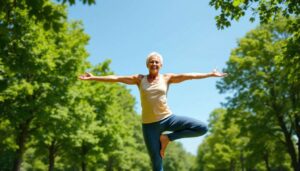


Maintaining physical fitness beyond middle age requires more than occasional activity. Standing exercises serve as a powerful indicator of overall health, revealing the body’s ability to sustain effort without external support. For those over 55, the capacity to complete specific movements while upright demonstrates a level of conditioning that extends far beyond basic mobility. This assessment combines muscular strength, cardiovascular capacity, and mental determination into a single, revealing challenge that separates average fitness from truly exceptional endurance.
Endurance After 55: why It Matters ?
The Foundation of Independent Living
Physical endurance serves as the cornerstone of independence in later life. The ability to sustain activity without excessive fatigue directly impacts daily functionality, from grocery shopping to gardening. Unlike isolated strength, endurance requires the body to maintain performance over extended periods, demanding efficient oxygen delivery and sustained muscle engagement. This capacity becomes increasingly critical as natural aging processes begin to affect muscle fiber composition and cardiovascular efficiency.
Physiological Changes That Demand Attention
The body undergoes significant transformations after 55 that directly impact endurance capabilities. These changes include:
- Gradual reduction in fast-twitch muscle fibers responsible for power
- Decreased cardiac output affecting oxygen distribution
- Reduced mitochondrial density within muscle cells
- Slower recovery times between physical efforts
Understanding these shifts helps explain why endurance training becomes essential rather than optional. The body’s ability to deliver oxygen-rich blood to working muscles diminishes without consistent challenge, creating a cycle of declining capacity that accelerates functional limitations.
Beyond Physical Health
Endurance extends its benefits beyond mere physical capability. Research consistently shows that individuals maintaining higher endurance levels experience improved cognitive function, better mood regulation, and enhanced sleep quality. The cardiovascular demands of endurance activities stimulate neurological pathways, supporting mental acuity alongside physical prowess.
Understanding these broader implications sets the stage for examining how standing exercises specifically measure this vital component of fitness.
The Standing Endurance Test: how It Works
Continuous Movement Without Rest
The standing endurance test evaluates fitness through uninterrupted exercise sequences performed entirely upright. This approach eliminates rest periods that might allow partial recovery, forcing the body to maintain output despite accumulating fatigue. The test format reveals weaknesses in cardiovascular conditioning, muscular stamina, and mental resilience simultaneously.
What Makes Standing Exercises Unique
Performing exercises while standing creates distinct physiological demands compared to seated or supine movements. The body must simultaneously:
- Maintain postural stability through core engagement
- Support full body weight throughout each repetition
- Coordinate balance while executing dynamic movements
- Manage blood pressure changes from upright positioning
These combined requirements make standing exercises particularly revealing assessments of functional fitness that translates directly to real-world activities.
Measuring True Capacity
The test’s continuous nature prevents compensatory strategies that might mask underlying limitations. Without pause, the cardiovascular system must sustain oxygen delivery while muscles work through progressive fatigue. This reveals the true integration of systems rather than isolated component strength.
With this framework established, examining the specific exercises that comprise this challenging assessment becomes essential.
Essential Standing Exercises for Elite Endurance
Exercise One: bodyweight Squats
The foundation of the test begins with controlled bodyweight squats. Proper execution requires feet positioned shoulder-width apart, core muscles actively engaged, and chest maintained upright throughout the movement. The target of 20 consecutive repetitions challenges both leg strength and cardiovascular endurance as heart rate elevates with each descent and ascent.
Exercise Two: standing Knee Raises
Following squats without rest, alternating knee raises test hip flexor endurance and balance. This movement demands:
- Lifting each knee to hip height while maintaining posture
- Controlling descent without momentum
- Sustaining rhythm for 30 total repetitions
- Preventing compensatory lean or sway
The transition from squats to knee raises taxes different muscle groups while maintaining cardiovascular demand, preventing any system from recovering.
Exercise Three: calf Raises
The third component targets lower leg endurance through standing calf raises. Rising onto the balls of both feet and lowering with control for 25 repetitions challenges often-neglected muscles crucial for walking stability and fall prevention. Accumulated fatigue from previous exercises makes maintaining proper form increasingly difficult.
Exercise Four: standing Marches
The final exercise combines elements of the previous movements into a continuous marching pattern. Lifting knees while maintaining upright posture for 40 total steps (20 per leg) completes the assessment. By this point, cardiovascular stress peaks as the body struggles to meet oxygen demands while muscular fatigue accumulates.
| Exercise | Repetitions | Primary Challenge |
|---|---|---|
| Bodyweight Squats | 20 | Leg strength and core stability |
| Standing Knee Raises | 30 (alternating) | Hip flexors and balance |
| Calf Raises | 25 | Lower leg endurance |
| Standing Marches | 40 (total steps) | Integrated cardiovascular capacity |
Completing this sequence reveals specific insights about overall conditioning that merit closer examination.
What Your Ability to Perform These Exercises Says About Your Fitness
Elite Status Indicators
Successfully completing all four exercises without rest places individuals in an exceptional fitness category for their age group. This achievement demonstrates that cardiovascular efficiency remains robust, muscle fibers maintain adequate oxidative capacity, and neurological coordination supports complex movement patterns under fatigue.
Common Failure Points and Their Meaning
Most individuals encounter difficulty at predictable stages that reveal specific limitations:
- Stopping during squats indicates inadequate leg strength or poor movement mechanics
- Struggling with knee raises suggests hip flexor weakness or balance deficits
- Incomplete calf raises reveal lower leg conditioning gaps
- Unable to finish marches points to cardiovascular limitations
These failure patterns provide valuable diagnostic information for targeting improvement efforts.
Comparative Performance Metrics
Research indicates that fewer than 30 percent of individuals over 55 complete this sequence without modification or rest. Those who succeed typically maintain regular physical activity incorporating both strength and endurance components. The test effectively separates casual exercisers from those with dedicated conditioning programs.
Understanding these performance indicators naturally leads to strategies for improvement.
Tips to Improve Your Standing Endurance After 55
Progressive Overload Principles
Improving endurance requires systematic increases in training volume and intensity. Begin by performing each exercise separately with adequate rest, gradually reducing recovery time between movements. Once comfortable, chain two exercises together before progressing to three, then finally all four without pause.
Specific Training Strategies
Targeted approaches accelerate endurance development:
- Interval training alternating high-intensity efforts with brief recovery
- Circuit training combining strength and cardiovascular demands
- Tempo variations controlling movement speed to increase time under tension
- Volume progression adding repetitions weekly to build capacity
Consistency proves more valuable than intensity, with three to four sessions weekly producing superior results compared to sporadic intense efforts.
Recovery and Adaptation
Adequate recovery allows physiological adaptations to occur. This includes proper sleep, sufficient protein intake, and active recovery days featuring gentle movement. Pushing too hard without recovery actually impairs progress by preventing the body from adapting to training stress.
These improvements extend beyond test performance into everyday activities.
The Positive Impact of Good Endurance on Daily Life After 55
Practical Functional Benefits
Enhanced endurance transforms routine activities from challenging tasks into effortless accomplishments. Grocery shopping, household maintenance, and recreational pursuits become more enjoyable when fatigue no longer limits participation. The confidence gained from improved capacity often encourages individuals to attempt activities previously avoided.
Health Markers and Longevity
Superior endurance correlates with improved health outcomes across multiple systems:
- Lower resting heart rate indicating efficient cardiac function
- Improved blood pressure regulation reducing cardiovascular disease risk
- Enhanced glucose metabolism supporting metabolic health
- Reduced inflammation markers associated with chronic disease
These physiological improvements contribute to both lifespan and healthspan, extending years of active, independent living.
Social and Psychological Advantages
The mental benefits of maintained endurance often prove as valuable as physical gains. Individuals report increased self-efficacy, reduced anxiety about physical limitations, and greater willingness to engage socially. The knowledge that one possesses elite endurance for their age group provides significant psychological reinforcement.
Standing endurance exercises offer a practical, accessible method for assessing and improving fitness after 55. The four-exercise sequence provides clear benchmarks that reveal cardiovascular capacity, muscular stamina, and functional strength simultaneously. Achieving elite status by completing this challenge without rest demonstrates exceptional conditioning that supports independence, health, and quality of life. For those currently unable to finish the sequence, systematic training using progressive overload principles creates a clear path toward improvement. The investment in building endurance pays dividends across all aspects of daily living, from routine tasks to recreational pursuits, while supporting long-term health outcomes that extend active years well beyond average expectations.