



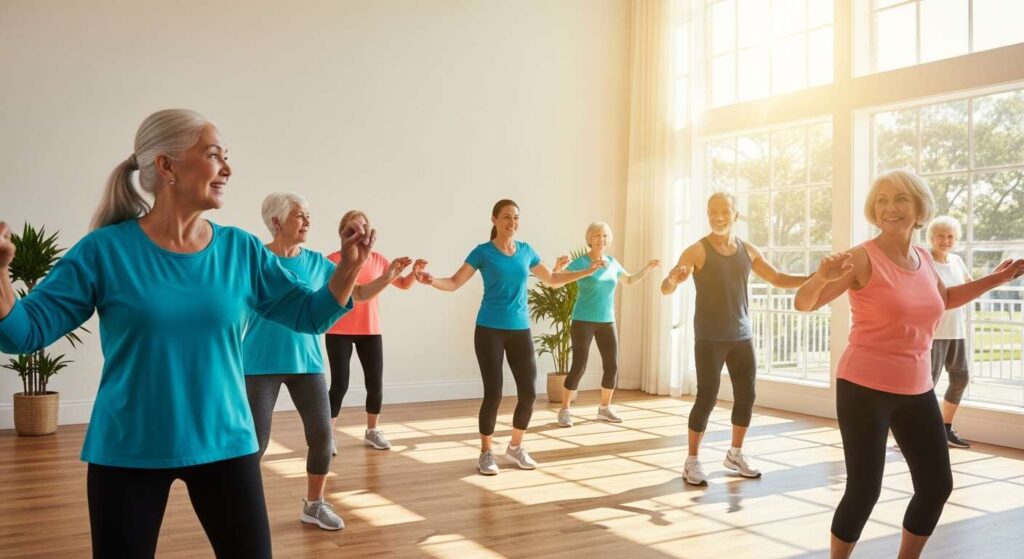
Many fitness professionals who work with older adults face a common challenge: designing effective upper-body workouts for clients who cannot easily get down on the floor or back up again. This limitation doesn’t mean sacrificing strength training benefits. Standing and seated exercises using resistance bands offer a practical, safe alternative that delivers real results without requiring floor work. These routines specifically target the arms, shoulders, and back while accommodating mobility restrictions that many seniors experience. The approach prioritizes safety and accessibility while maintaining the effectiveness needed to build and preserve muscle strength in later years.
Why strengthening upper body muscles in seniors is essential
Maintaining functional independence through muscle strength
Upper body strength directly impacts a senior’s ability to perform daily living activities without assistance. Simple tasks like lifting groceries, opening jars, reaching overhead cabinets, or pushing open heavy doors all require adequate arm, shoulder, and back strength. As muscle mass naturally declines with age, maintaining these capabilities becomes increasingly important for preserving independence and quality of life.
Reducing fall risk and improving balance
Strong upper body muscles contribute significantly to overall stability and balance. The back and shoulder muscles work together to maintain proper posture, which directly affects balance and coordination. Seniors with better upper body strength can:
- Catch themselves more effectively if they begin to stumble
- Use assistive devices like walkers or canes more efficiently
- Recover balance more quickly when off-center
- Maintain better overall body alignment during movement
Supporting bone health and metabolic function
Resistance training for the upper body provides benefits beyond muscle building. Regular strength work helps maintain bone density, particularly important for preventing fractures in areas like the wrists, arms, and shoulders. Additionally, muscle tissue remains metabolically active, helping seniors maintain healthier body composition and supporting overall metabolic health as they age.
Understanding these benefits sets the foundation for appreciating why the exercise approach matters just as much as the exercises themselves.
The importance of standing exercises for seniors
Eliminating mobility barriers to exercise
Floor-based exercises present significant obstacles for many older adults. Getting down to the ground and back up again can be physically challenging, painful, or even dangerous for those with joint issues, balance problems, or limited flexibility. Standing exercises remove this barrier entirely, making strength training accessible to a much broader population of seniors who would otherwise avoid exercise altogether.
Functional movement patterns that translate to daily life
Standing exercises naturally mimic the positions seniors use throughout their day. Training in an upright position develops strength in the same postures used for:
- Reaching into cupboards or closets
- Carrying items while walking
- Pulling doors open or closed
- Pushing shopping carts or wheelchairs
This functional approach means the strength gained transfers directly to improved performance in everyday situations, making the exercises immediately practical and relevant.
Building confidence through accessible progression
Seniors who struggle with floor exercises often experience anxiety about their physical limitations. Standing routines build confidence by demonstrating what they can accomplish safely. This psychological benefit encourages consistency and long-term adherence to exercise programs, which ultimately determines success in maintaining strength and mobility over time.
With the rationale established, the specific exercises that deliver these benefits deserve detailed attention.
Standing workout routine tailored for seniors
Banded row for back and arm strength
The banded row targets the upper back muscles, rear shoulders, and biceps through a pulling motion. To perform this exercise, loop a resistance band around a sturdy anchor point at chest height. Stand facing the anchor, holding one end of the band in each hand with arms extended forward. Pull both hands toward your chest by bending your elbows and squeezing your shoulder blades together, then slowly return to the starting position with control.
| Exercise Component | Specification |
|---|---|
| Sets | 3 |
| Repetitions per set | 10 to 15 |
| Rest between sets | 60 to 90 seconds |
| Band resistance | Moderate intensity |
Seated band chest press for pushing strength
This exercise develops the chest, front shoulders, and triceps while providing stable seated support. Sit in a sturdy chair and position the resistance band behind your back at shoulder blade level, holding one end in each hand. With elbows bent and hands at chest height, press both arms forward until nearly straight, then return slowly to the starting position. The seated position eliminates balance concerns while allowing full focus on the pressing movement.
Seated torso twists for core and rotational strength
Rotational exercises address the often-neglected twisting movements needed for looking behind while walking or reaching across the body. Using the same seated setup as the chest press, hold the band with both hands at chest level. Keeping your hips facing forward, rotate your upper body to one side, hold briefly, return to center, then rotate to the opposite side. This controlled rotation strengthens the obliques and deep core muscles that support spinal stability.
Performing these exercises correctly requires attention to proper form and safety considerations that protect against injury.
Safety tips for practicing safely
Medical clearance and individual assessment
Before beginning any new exercise program, seniors should consult with their physician, especially those with existing health conditions. Medical professionals can identify specific precautions or modifications needed based on individual health status, medications, or previous injuries. This personalized medical guidance ensures the exercise program supports rather than compromises health.
Equipment selection and setup verification
Using appropriate equipment prevents accidents and ensures effective workouts. Key equipment considerations include:
- Selecting resistance bands with moderate tension that allows proper form throughout the full range of motion
- Verifying anchor points are solidly secured and cannot slip or break during use
- Choosing chairs with stable, non-slip bases and no wheels
- Inspecting bands regularly for signs of wear, tears, or weakening
Movement quality over quantity
Proper form takes precedence over completing a specific number of repetitions. Seniors should focus on controlled, deliberate movements rather than rushing through sets. If maintaining good form becomes difficult, reducing the repetitions or using lighter resistance proves more beneficial than continuing with compromised technique that increases injury risk.
Recognizing warning signs during exercise
Understanding when to stop exercising protects against serious complications. Seniors should immediately cease activity and seek medical attention if they experience sharp pain, dizziness, chest discomfort, unusual shortness of breath, or any symptoms that feel abnormal or concerning during or after exercise.
Beyond basic safety, specific strategies can enhance the effectiveness of these standing routines.
Tips to maximize the benefits of standing exercises
Consistency and progressive overload
Regular practice delivers better results than sporadic intense sessions. Aim for two to three sessions per week with at least one rest day between workouts to allow muscle recovery. As exercises become easier, gradually increase difficulty by using stronger resistance bands, adding repetitions, or slowing down the movement tempo rather than jumping to dramatically heavier resistance.
Breathing patterns and tempo control
Proper breathing enhances performance and prevents unnecessary blood pressure spikes. Exhale during the exertion phase of each exercise and inhale during the return to starting position. Maintaining a steady, controlled tempo throughout each repetition maximizes muscle engagement and reduces momentum that can diminish effectiveness.
Combining upper body work with comprehensive fitness
While upper body strength remains important, balanced fitness includes multiple components:
- Lower body strengthening for walking and stair climbing ability
- Flexibility work to maintain range of motion
- Balance training to reduce fall risk
- Cardiovascular activity for heart health
Integrating these complementary fitness elements creates a well-rounded program that addresses all aspects of healthy aging and functional independence.
Standing and seated resistance band exercises provide seniors with accessible, effective methods for building upper body strength without the challenges of floor-based workouts. These routines target essential muscle groups that support daily activities, reduce fall risk, and maintain independence. By prioritizing safety through medical clearance, proper equipment, and attention to form, older adults can confidently pursue strength training that fits their current abilities. Consistency with these exercises, combined with progressive difficulty increases and integration into a broader fitness approach, delivers meaningful improvements in strength, function, and quality of life for seniors facing mobility limitations.