



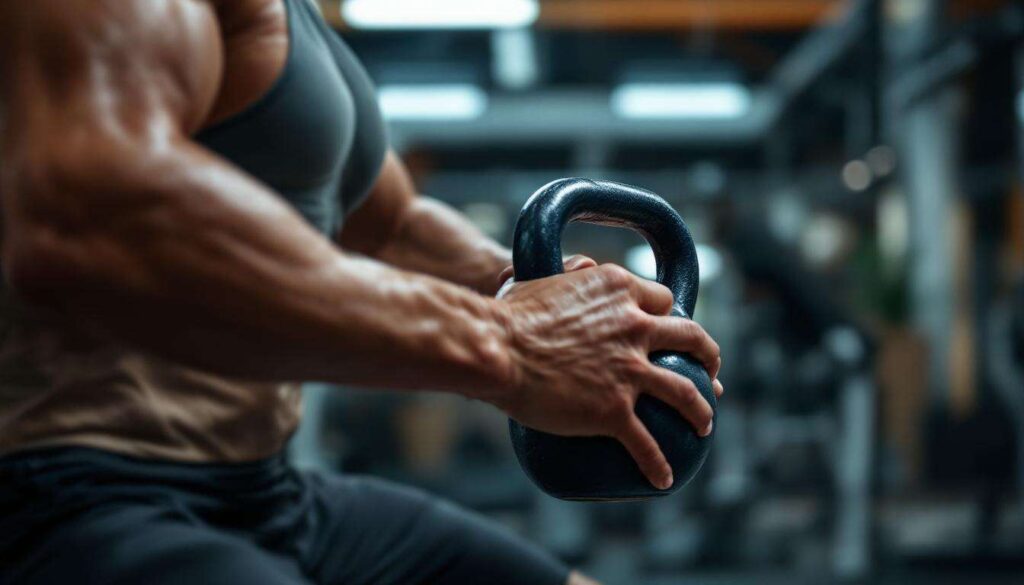
Building functional strength doesn’t require a fully equipped gym or an arsenal of expensive equipment. A single kettlebell and four carefully selected movements can transform your fitness routine, delivering comprehensive results that translate directly to everyday activities. This approach emphasizes quality over quantity, focusing on compound exercises that engage multiple muscle groups simultaneously while improving coordination, balance, and cardiovascular endurance. The beauty of kettlebell training lies in its efficiency: these dynamic movements challenge your body in ways that traditional weightlifting cannot replicate, creating a foundation of practical strength that extends far beyond the gym floor.
Introduction to the kettlebell: a unique tool for functional strength
What makes the kettlebell different from traditional weights
The kettlebell’s distinctive design sets it apart from dumbbells and barbells in several crucial ways. Its off-center mass distribution creates an unstable load that forces your body to engage stabilizing muscles throughout each movement. The thick handle requires enhanced grip strength, while the compact shape allows for fluid, ballistic movements that develop explosive power. Unlike static exercises with conventional weights, kettlebell training incorporates momentum and rotation, mimicking real-world movement patterns that improve overall athleticism.
The history and evolution of kettlebell training
Originally developed in Russia as a tool for weighing crops, kettlebells evolved into training implements for strongmen and military personnel. Their effectiveness in building functional strength and endurance made them indispensable in Soviet athletic programs. Today, kettlebells have gained worldwide recognition among fitness professionals who appreciate their versatility and efficiency. The resurgence of kettlebell training reflects a broader shift toward functional fitness that prioritizes movement quality and practical strength over isolated muscle development.
Understanding the unique characteristics of this training tool provides context for why just four movements can deliver such comprehensive results.
The benefits of kettlebell for a complete workout
Comprehensive muscle engagement and calorie burn
Kettlebell exercises activate multiple muscle groups simultaneously, creating a metabolic demand that burns calories long after your workout ends. This full-body engagement improves cardiovascular fitness while building strength, making kettlebell training exceptionally time-efficient. Research indicates that a twenty-minute kettlebell workout can burn as many calories as running at a six-minute-mile pace, while simultaneously developing muscular strength and endurance.
| Benefit | Impact | Time Frame |
|---|---|---|
| Calorie expenditure | 400-600 calories per session | 20-30 minutes |
| Muscle activation | 600+ muscles engaged | Per workout |
| Cardiovascular improvement | 15-20% increase in VO2 max | 8-12 weeks |
| Strength gains | 20-30% increase | 6-8 weeks |
Improved mobility and injury prevention
The dynamic nature of kettlebell movements enhances joint mobility and flexibility while strengthening connective tissues. These exercises develop functional range of motion that translates directly to daily activities, reducing injury risk in both athletic and everyday contexts. The emphasis on proper hip hinging, core stabilization, and controlled movement patterns creates a foundation for safe, effective training across all fitness activities.
Enhanced core stability and posture
Every kettlebell exercise requires significant core engagement to maintain proper form and control the weight. This constant activation strengthens the entire core musculature, including deep stabilizing muscles often neglected in traditional ab exercises. Improved core strength directly impacts posture, reducing back pain and enhancing overall movement efficiency. The anti-rotational demands of kettlebell training develop functional core strength that supports spinal health and athletic performance.
These comprehensive benefits explain why four strategic movements can deliver such transformative results.
First move: the swing for a powerful body
Proper technique and execution
The kettlebell swing serves as the foundation movement for kettlebell training, developing explosive hip power and posterior chain strength. Begin with feet shoulder-width apart, gripping the kettlebell with both hands. Initiate the movement by hinging at the hips, pushing them back while maintaining a neutral spine. Drive through the heels, explosively extending the hips to propel the kettlebell forward to chest height. The power comes from the hip snap, not arm strength, with the arms serving merely as connectors between body and weight.
Muscles targeted and functional benefits
The swing primarily engages the posterior chain, including:
- Glutes and hamstrings for hip extension power
- Lower back muscles for spinal stabilization
- Core musculature for force transfer
- Shoulders and upper back for weight control
- Grip and forearm muscles for maintaining hold
This movement pattern mirrors everyday activities like lifting objects from the ground, jumping, and running, making it exceptionally functional for daily life. The cardiovascular demand of high-repetition swings develops conditioning while building strength, creating a unique training stimulus that combines power development with metabolic conditioning.
With the swing establishing foundational hip power, the next movement builds lower body strength through a different movement pattern.
Second move: the goblet squat for strong legs
Step-by-step execution guide
The goblet squat develops lower body strength while teaching proper squatting mechanics. Hold the kettlebell by the horns at chest level, keeping elbows tucked close to the body. Stand with feet slightly wider than shoulder-width, toes pointed slightly outward. Descend by simultaneously bending the knees and pushing the hips back, keeping the chest upright and weight in the heels. Lower until the elbows brush the inside of the knees, then drive through the entire foot to return to standing. The counterbalance effect of the front-loaded weight allows for deeper squats with better form than traditional back squats.
Why goblet squats build functional leg strength
This movement develops comprehensive lower body strength while improving mobility and squat mechanics. The front-loaded position encourages an upright torso, reducing lower back stress while maximizing quadriceps, glute, and core engagement. The goblet squat teaches proper weight distribution and knee tracking, skills that transfer directly to daily activities like sitting, standing, and lifting.
| Muscle Group | Engagement Level | Functional Benefit |
|---|---|---|
| Quadriceps | Primary | Knee extension power |
| Glutes | Primary | Hip extension strength |
| Core | Secondary | Spinal stabilization |
| Upper back | Secondary | Postural support |
Having developed lower body strength through squatting, the clean introduces a dynamic movement that connects lower and upper body power.
Third move: the kettlebell clean for increased stability
Mastering the clean technique
The kettlebell clean transitions the weight from ground to rack position in one fluid motion. Start with the kettlebell between your feet, hinging at the hips as in the swing. Pull the kettlebell up close to the body, allowing it to flip smoothly onto the forearm as you catch it at shoulder height. The movement requires precise timing and coordination, teaching your body to generate and absorb force efficiently. The kettlebell should land softly in the rack position, with the weight resting on the forearm and the elbow tucked against the ribcage.
Full-body coordination and stability development
The clean demands integration of multiple movement patterns, developing neuromuscular coordination that enhances overall athleticism. This exercise strengthens:
- Hip drive and power generation
- Core stability during dynamic movement
- Shoulder and upper back control
- Grip strength and forearm endurance
- Timing and body awareness
The clean serves as a transitional movement in many kettlebell routines, connecting ground-based exercises with overhead movements. Its emphasis on controlled power and precise technique develops functional stability that translates to improved performance in sports and daily activities requiring quick, coordinated movements.
Once you’ve mastered bringing the kettlebell to shoulder height, the press completes the kinetic chain by developing overhead strength.
Fourth move: the kettlebell press to build upper body strength
Executing the perfect overhead press
The kettlebell press develops upper body strength through a challenging overhead movement. Begin with the kettlebell in the rack position, weight resting on the forearm at shoulder height. Engage the core and glutes to create a stable base, then press the weight overhead by extending the arm while rotating the palm forward. The path should be slightly diagonal, finishing with the bicep near the ear and the shoulder packed down. Lower with control back to the rack position. This movement requires full-body tension, with the legs, core, and non-working side all contributing to stability.
Upper body and core integration
Unlike traditional pressing exercises, the kettlebell press demands significant core and lower body engagement to maintain stability. The offset load creates rotational forces that the core must resist, developing anti-rotational strength crucial for injury prevention. Primary muscles worked include:
- Shoulders (deltoids) for pressing power
- Triceps for arm extension
- Upper back and rotator cuff for shoulder stability
- Core muscles for spinal stabilization
- Glutes and legs for maintaining base stability
The unilateral nature of single-arm pressing identifies and corrects strength imbalances while developing functional shoulder strength that supports overhead activities in daily life and sports. The emphasis on stability and control makes this movement exceptionally valuable for building resilient, injury-resistant shoulders.
These four movements work synergistically to develop complete functional strength. The swing builds explosive hip power and posterior chain strength, while the goblet squat develops lower body strength through a different movement pattern. The clean connects these foundational movements with upper body exercises, and the press completes the kinetic chain by developing overhead strength and stability. Together, they create a comprehensive training system that addresses all major movement patterns and muscle groups. This minimalist approach proves that effective strength training doesn’t require complexity, just strategic exercise selection and consistent practice with proper form.