

Maintaining physical stability becomes increasingly crucial as we age, yet many people overlook this fundamental aspect of fitness until they experience their first fall or near-miss. A seasoned fitness professional demonstrates that age is no barrier to achieving remarkable balance and shares practical techniques that require no equipment, no gym membership, and minimal space. These proven methods have helped countless individuals regain confidence in their movements and reduce their risk of injury through simple, targeted exercises that anyone can perform in the comfort of their own living room.
Introduction to balance strengthening
Balance represents a complex interaction between multiple body systems, including the vestibular system in the inner ear, visual processing, and proprioception from muscles and joints. As we age, these systems naturally decline, making falls one of the leading causes of injury among older adults. The good news is that balance, like strength and flexibility, can be trained and improved through consistent practice.
Understanding the mechanics of stability
The body maintains equilibrium through constant micro-adjustments that occur without conscious thought. When standing on one leg or navigating uneven terrain, proprioceptors in the feet, ankles, and legs send rapid signals to the brain about body position. The brain then coordinates muscular responses to keep the center of gravity over the base of support. This intricate process can be enhanced through targeted exercises that challenge these systems in controlled ways.
Why balance training matters at any age
Developing better stability offers benefits that extend far beyond fall prevention. Improved balance enhances athletic performance, supports better posture, and increases confidence in daily activities. Whether reaching for items on high shelves, walking on slippery surfaces, or simply standing for extended periods, enhanced balance makes every movement safer and more efficient.
- Reduced risk of falls and related injuries
- Improved coordination and body awareness
- Enhanced core strength and stability
- Greater independence in daily activities
- Better performance in sports and recreational activities
This foundation of understanding sets the stage for exploring the credentials and experience of someone who has dedicated decades to perfecting these techniques.
The expertise of a 68-year-old coach
Joan MacDonald has spent over four decades working in fitness education, but her most impressive transformation began after retirement. Facing declining mobility and multiple health concerns, she decided to take control of her physical well-being rather than accepting age-related limitations. Her personal journey from struggling with basic movements to achieving remarkable strength and balance has made her a credible voice in the fitness community.
Professional background and qualifications
With certifications in personal training, senior fitness, and functional movement, this coach brings both academic knowledge and lived experience to her teaching. She has worked with hundreds of clients ranging from their forties to their nineties, adapting exercises to accommodate various fitness levels, mobility restrictions, and health conditions. Her approach emphasizes sustainable progress over quick fixes, recognizing that lasting change requires patience and consistency.
The philosophy behind the method
Rather than promoting complicated equipment or trendy workout programs, the coach advocates for simplicity and accessibility. Her philosophy centers on the idea that the most effective exercises are those that people will actually perform regularly. By focusing on bodyweight movements that can be done anywhere, she removes common barriers to exercise such as cost, transportation, and intimidation.
| Training principle | Application |
|---|---|
| Progressive overload | Gradually increasing difficulty as strength improves |
| Functional movement | Exercises that mimic real-life activities |
| Consistency over intensity | Regular moderate practice beats sporadic intense sessions |
| Individual adaptation | Modifications to suit personal capabilities |
Understanding her background and approach provides context for why her recommended exercises are both effective and achievable for a wide range of individuals.
The importance of bodyweight exercises
Bodyweight training offers unique advantages that make it particularly suitable for balance development. Unlike machines that stabilize the body or isolate specific muscles, bodyweight exercises require full-body coordination and engagement of stabilizing muscles throughout each movement. This holistic approach builds functional strength that translates directly to everyday activities.
Advantages over equipment-based training
The accessibility of bodyweight exercises cannot be overstated. They require no financial investment, no special clothing, and no dedicated workout space. This eliminates excuses and makes consistent practice feasible regardless of circumstances. Additionally, bodyweight exercises naturally scale to individual ability levels since the resistance is determined by body position and leverage rather than external weights.
- Zero equipment costs or maintenance
- Can be performed anywhere, anytime
- Lower injury risk compared to heavy weights
- Develops practical, functional strength
- Easily modified for different fitness levels
- Engages multiple muscle groups simultaneously
Building proprioception through natural movement
When performing bodyweight exercises, the body must constantly adjust to maintain proper form and balance. This continuous feedback loop between muscles, joints, and the nervous system strengthens proprioception more effectively than exercises performed on stable machines. The slight wobbles and corrections that occur during a single-leg stand or a plank variation are exactly what train the body to maintain stability in unpredictable real-world situations.
With this understanding of why bodyweight training is so effective, we can now examine the specific exercises that deliver the greatest balance benefits.
The basic exercises to improve balance
The coach recommends five fundamental movements that target different aspects of balance and stability. Each exercise can be modified to match current ability levels, making them appropriate for beginners while still challenging for advanced practitioners.
Single-leg stands
This foundational exercise involves standing on one foot while maintaining proper posture. Begin by holding the position for 10 seconds, gradually working up to 30 seconds or more per leg. For added difficulty, close your eyes or stand on an unstable surface like a folded towel. To make it easier, lightly touch a wall or chair for support. The key is maintaining a tall spine and engaging the core throughout the hold.
Heel-to-toe walking
Also known as tandem walking, this exercise mimics walking on a tightrope. Place one foot directly in front of the other so the heel of the front foot touches the toes of the back foot. Take slow, controlled steps in a straight line for 20 to 30 feet. This movement challenges lateral stability and coordination while improving gait quality. Perform this exercise near a wall initially for safety.
Standing leg lifts
While standing on one leg, lift the opposite leg out to the side, forward, or backward, holding each position briefly before returning to the starting point. This exercise strengthens the hip stabilizers while challenging balance. Perform 10 to 15 repetitions in each direction per leg. Keep movements controlled rather than using momentum, and maintain proper alignment throughout.
Chair squats
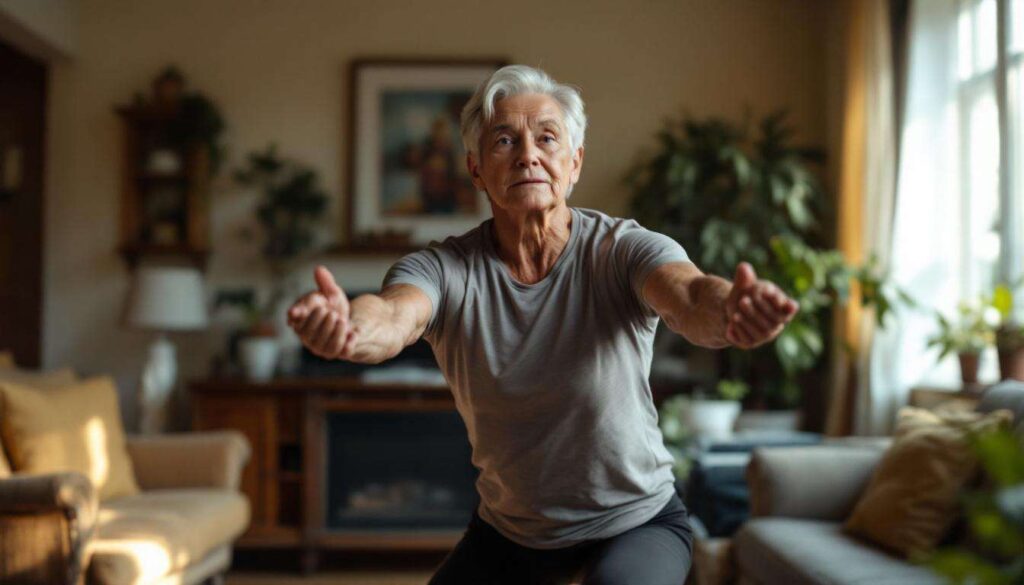
Position yourself in front of a sturdy chair and lower down as if sitting, but stop just before making contact with the seat. Hold this position for a moment before standing back up. This exercise builds leg strength essential for balance while teaching proper movement patterns. As strength improves, eliminate the chair and perform freestanding squats.
Modified planks
Begin on hands and knees, then extend one leg behind you while maintaining a straight line from head to heel. Hold for 15 to 30 seconds before switching sides. This exercise develops core stability and body awareness. Progress to full planks on hands or forearms as strength increases. The constant engagement required to maintain proper form directly translates to better balance in upright positions.
| Exercise | Primary benefit | Starting duration/reps |
|---|---|---|
| Single-leg stands | Static balance | 10 seconds per leg |
| Heel-to-toe walking | Dynamic balance | 20 feet |
| Standing leg lifts | Hip stability | 10 per direction |
| Chair squats | Lower body strength | 10 repetitions |
| Modified planks | Core stability | 15 seconds per side |
Knowing which exercises to perform is only part of the equation; understanding how to practice them safely and effectively at home is equally important.
Tips for practicing at home
Creating a safe and effective home practice requires minimal preparation but thoughtful execution. The right environment and approach can make the difference between steady progress and frustration or injury.
Setting up a safe practice space
Choose an area with adequate room to move freely without obstacles. Clear away furniture, rugs, or other items that could cause tripping. Practice on a non-slip surface and ensure good lighting so you can see clearly. Keep a sturdy chair or wall nearby for support if needed, especially when first learning the exercises. Remove socks or wear proper athletic shoes to prevent slipping.
Progression strategies for sustained improvement
Begin with the easiest variation of each exercise and focus on perfect form rather than duration or repetitions. Only progress to more challenging versions once you can perform the current level comfortably and with control. Add 5 seconds or 2 to 3 repetitions each week rather than making large jumps that could lead to overexertion or injury.
- Master proper form before increasing difficulty
- Progress gradually in small increments
- Listen to your body and rest when needed
- Keep a simple log to track improvements
- Celebrate small victories along the way
Common mistakes to avoid
Many people rush through exercises or attempt advanced variations before building adequate foundation strength. Holding your breath during exertion is another frequent error that can cause dizziness and reduce exercise effectiveness. Always breathe naturally and steadily throughout each movement. Avoid practicing when fatigued, as tiredness significantly increases fall risk and reduces the quality of movement patterns.
Implementing these practical tips ensures that home practice remains safe and productive, setting the stage for experiencing the full range of benefits that come from regular training.
The benefits of a regular routine
Consistency transforms these simple exercises from occasional activities into powerful tools for long-term health and independence. The cumulative effects of regular practice extend far beyond improved balance, touching nearly every aspect of physical well-being.
Physical improvements beyond balance
Regular balance training strengthens muscles throughout the body, particularly the core, hips, and ankles. This increased strength improves posture, reduces back pain, and makes everyday activities easier. Many practitioners report better sleep quality, increased energy levels, and enhanced mobility in joints. The exercises also support bone density, which is particularly important for preventing osteoporosis.
Mental and emotional advantages
The confidence gained from improved physical stability has profound psychological benefits. People who practice regularly often report reduced anxiety about falling and greater willingness to engage in social activities and travel. The discipline of maintaining a routine also provides structure and a sense of accomplishment, contributing to better mental health and overall life satisfaction.
Long-term independence and quality of life
Perhaps the most significant benefit is the ability to maintain independence as you age. Better balance means fewer falls, which translates to fewer injuries and hospitalizations. This allows individuals to continue living in their own homes, participating in activities they enjoy, and maintaining social connections that are vital for healthy aging.
| Timeframe | Expected improvements |
|---|---|
| 2-4 weeks | Increased confidence, better body awareness |
| 6-8 weeks | Noticeable strength gains, improved stability |
| 3-6 months | Significant balance improvement, reduced fall risk |
| 1 year+ | Sustained independence, enhanced quality of life |
Balance training through bodyweight exercises offers a practical, accessible path to better physical health and independence. The five exercises shared by an experienced coach provide a complete program that addresses multiple aspects of stability and strength. By starting with appropriate modifications, progressing gradually, and maintaining consistency, individuals of any age can experience meaningful improvements in their balance and overall well-being. The investment of just 15 to 20 minutes several times per week can yield returns that last a lifetime, preventing falls, building confidence, and preserving the ability to live life fully and independently.