



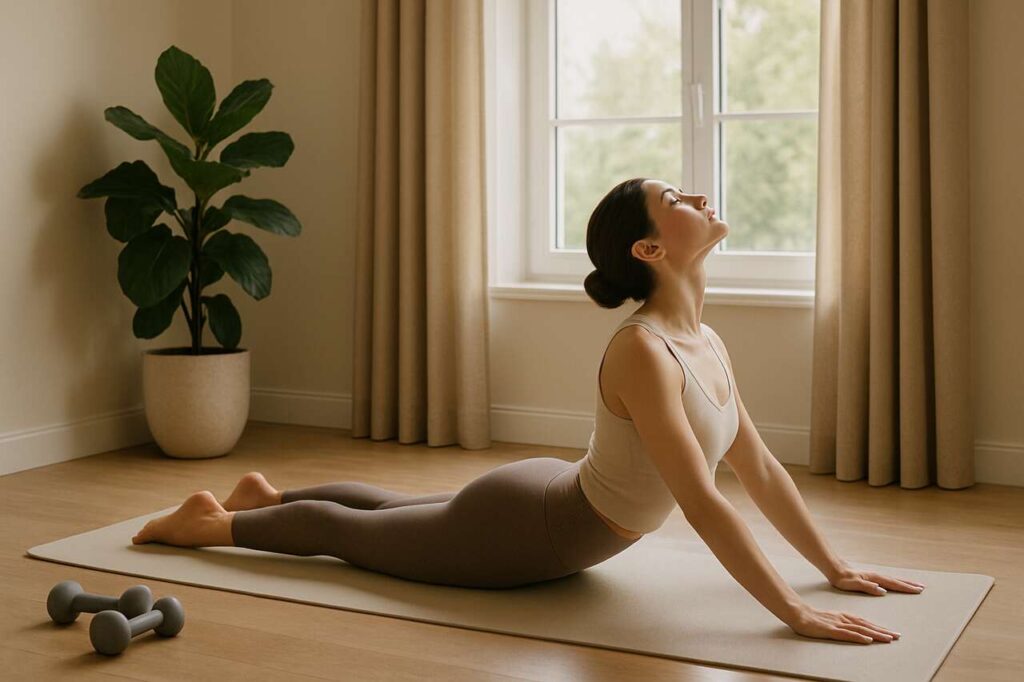
Back stiffness has become an increasingly common complaint among people of all ages, often attributed to long hours at desks, sedentary lifestyles, and poor posture habits. According to Pilates experts, the root cause isn’t just about sitting too much but rather about not moving the spine through its full range of motion regularly. The human spine is designed for movement, and when we restrict that natural mobility, our muscles tighten, joints stiffen, and discomfort sets in. The good news is that targeted movement can reverse this pattern, and Pilates offers some of the most effective exercises for restoring spinal flexibility and reducing that nagging stiffness.
Understanding back stiffness
The anatomy of a stiff spine
The spine consists of 33 vertebrae separated by intervertebral discs that act as shock absorbers. When we remain in static positions for extended periods, these discs don’t receive adequate nutrition from the surrounding fluids. Movement is essential for pumping nutrients into the discs and removing waste products. Without this natural circulation, the discs can become dehydrated and less flexible, leading to stiffness and discomfort throughout the back.
Common causes of reduced spinal mobility
Several factors contribute to back stiffness beyond simple inactivity:
- Prolonged sitting in poorly designed chairs that don’t support natural spinal curves
- Repetitive movements that favor one direction while neglecting others
- Stress and tension that cause muscles to contract and remain tight
- Weak core muscles that fail to support the spine adequately
- Previous injuries that create compensatory movement patterns
Understanding these causes helps explain why simply standing up occasionally isn’t enough to maintain spinal health. The spine needs deliberate, varied movement to stay supple and pain-free. This understanding naturally leads to exploring why movement itself is the solution rather than rest or passive treatments.
Why moving is essential for your back
The use it or lose it principle
The human body operates on a fundamental principle: tissues adapt to the demands placed upon them. When we stop moving our spine through its full range, the surrounding muscles, ligaments, and fascia literally shorten and tighten. This isn’t a sign of aging but rather a response to decreased demand. Regular movement signals the body to maintain flexibility and strength in these tissues, preventing the gradual loss of mobility that many people accept as inevitable.
How movement nourishes spinal structures
The intervertebral discs lack direct blood supply and instead rely on movement to receive nutrients. When the spine bends, twists, and extends, it creates pressure changes that draw fluid containing oxygen and nutrients into the discs while expelling waste products. This process, called imbibition, only occurs through movement. Static positions, even technically correct ones, don’t provide this essential nourishment.
| Movement Type | Spinal Benefit | Frequency Needed |
|---|---|---|
| Flexion (forward bending) | Opens posterior disc space | Multiple times daily |
| Extension (backward bending) | Opens anterior disc space | Multiple times daily |
| Rotation (twisting) | Maintains disc elasticity | Several times daily |
| Lateral flexion (side bending) | Balances muscular tension | Several times daily |
This scientific understanding of spinal nutrition through movement explains why certain exercise systems prove particularly effective for back health.
The benefits of Pilates for a healthy spine
Why Pilates targets back stiffness effectively
Pilates was originally developed by Joseph Pilates as a rehabilitation system, with spinal health at its core. Unlike many fitness approaches that emphasize repetitive movements in limited planes, Pilates systematically moves the spine through all ranges of motion while maintaining control and awareness. This combination of mobility and stability makes it uniquely suited for addressing back stiffness.
Core principles that support spinal health
Several Pilates principles directly address the causes of back stiffness:
- Concentration: bringing awareness to spinal position and movement quality
- Control: moving deliberately rather than allowing momentum to take over
- Centering: engaging deep core muscles that support the spine
- Flow: creating smooth transitions that keep the spine mobile
- Precision: targeting specific spinal segments that need attention
- Breathing: coordinating breath with movement to reduce tension
Research-backed results
Studies have demonstrated that regular Pilates practice leads to measurable improvements in spinal flexibility and reductions in chronic back pain. Participants in clinical trials reported decreased stiffness, improved range of motion, and better functional capacity in daily activities. These benefits stem from Pilates’ emphasis on controlled spinal articulation rather than static stretching alone. With this foundation established, specific exercises can address back stiffness directly.
Four Pilates exercises to loosen your back
Cat-Cow stretch with articulation
This foundational movement addresses stiffness by segmentally mobilizing each vertebra. Start on hands and knees with a neutral spine. Slowly round the spine from tailbone to head, moving one vertebra at a time into flexion. Pause at full flexion, then reverse the movement, extending from tailbone to head into a gentle arch. The key is moving slowly enough to feel each spinal segment rather than rushing through the motion.
Benefits include:
- Increased awareness of individual spinal segments
- Improved fluid circulation throughout the entire spine
- Gentle stretching of both anterior and posterior spinal muscles
- Reduced morning stiffness when performed upon waking
Spine twist seated
Rotational movements are often the most neglected in daily life, making this exercise particularly valuable. Sit tall with legs extended or crossed, depending on flexibility. Place hands behind the head or extend arms to shoulder height. Inhale to prepare, then exhale while rotating the spine to one side, keeping the pelvis stable. The movement should come from the thoracic spine rather than forcing the neck or lower back. Return to center and repeat on the opposite side.
This exercise specifically targets:
- Thoracic spine mobility, often the stiffest region
- Oblique abdominal muscles that support rotation
- Postural muscles that maintain upright positioning
Swimming preparation
Lying face down, this exercise builds back extensor strength while promoting spinal extension. Rest the forehead on the mat with arms extended overhead. Engage the abdominals to protect the lower back, then lift the head, chest, and arms slightly off the mat. Alternate lifting opposite arm and leg in a controlled swimming motion. The focus should be on lengthening the spine rather than lifting high, which can compress the lower back.
Key points for effectiveness:
- Keep movements small and controlled initially
- Maintain abdominal engagement throughout
- Breathe naturally without holding breath
- Focus on lengthening rather than height
Roll down and roll up
This exercise promotes sequential spinal flexion and extension in a vertical position. Standing with feet hip-width apart, slowly roll down through the spine, beginning with the head and moving vertebra by vertebra until the hands hang toward the floor. Pause briefly, then reverse the movement, stacking each vertebra from bottom to top until returning to standing. This movement pattern directly addresses the stiffness that develops from prolonged sitting.
The exercise provides multiple benefits including improved spinal articulation, hamstring flexibility, and awareness of proper alignment. Mastering these four movements creates a foundation for maintaining spinal health, but consistency matters more than perfection.
Expert tips for incorporating these moves into daily life
Creating a sustainable practice routine
Pilates experts emphasize that frequency trumps duration when addressing back stiffness. Rather than attempting hour-long sessions occasionally, perform these four exercises for 10 to 15 minutes daily. Morning practice helps counteract overnight stiffness, while evening sessions release accumulated tension from the day. The key is establishing a consistent habit rather than waiting until pain becomes severe.
Practical scheduling strategies
Integrating spinal mobility work into existing routines increases adherence:
- Perform cat-cow stretches immediately after waking, before getting out of bed
- Practice spine twists during work breaks, even while seated in a chair
- Use swimming preparation as a midday energizer on a yoga mat or carpet
- End the day with roll downs to release accumulated tension
Modifications for different fitness levels
These exercises adapt to various abilities and limitations. Beginners should focus on smaller ranges of motion with more repetitions, gradually increasing range as mobility improves. Those with existing back pain should work within comfortable limits, never forcing movements that create sharp pain. Using props like cushions, blocks, or rolled towels can make positions more accessible while maintaining proper alignment.
Building these habits creates immediate relief while also establishing patterns that protect against future problems.
Preventing long-term back issues
The cumulative effect of daily movement
Consistent practice of these Pilates movements creates lasting changes in spinal health. Over weeks and months, the spine maintains greater range of motion, muscles develop better endurance for postural support, and the nervous system learns more efficient movement patterns. These adaptations don’t just reduce current stiffness but prevent the progressive loss of mobility that often accompanies aging.
Complementary lifestyle adjustments
While these exercises form the foundation of spinal health, supporting habits enhance their effectiveness:
- Taking brief movement breaks every 30 to 45 minutes during sedentary work
- Varying sitting positions throughout the day rather than maintaining one posture
- Staying adequately hydrated to support disc nutrition
- Managing stress through breathing exercises or meditation
- Ensuring adequate sleep on a supportive mattress
Recognizing when to seek professional help
While these exercises address common stiffness effectively, certain symptoms warrant professional evaluation. Persistent pain lasting beyond six weeks, radiating pain into the legs, numbness or tingling, or pain accompanied by fever require medical assessment. A qualified Pilates instructor or physical therapist can provide personalized modifications and progressions based on individual needs and limitations.
Back stiffness responds remarkably well to consistent, targeted movement rather than rest or passive treatments. The four Pilates exercises outlined provide a practical, evidence-based approach to restoring spinal mobility and preventing future problems. By understanding that the spine requires regular movement through all ranges of motion, and by dedicating just 10 to 15 minutes daily to these practices, most people can significantly reduce stiffness and improve overall back health. The key lies not in perfection but in consistency, making these movements a non-negotiable part of daily self-care. Your spine is designed to move, and giving it that opportunity through deliberate practice pays dividends in comfort, function, and long-term wellness.