


Maintaining physical stability becomes increasingly critical as we age, with falls representing one of the leading causes of injury among older adults. The ability to hold specific standing poses serves as a reliable indicator of overall balance, strength, and coordination. Medical professionals and fitness experts have identified four fundamental standing positions that reveal whether your balance surpasses that of your peers after age 55. These poses not only assess your current stability but also highlight areas requiring attention to prevent future mobility challenges.
The importance of balance after 55
Balance deteriorates naturally with age due to multiple physiological changes affecting the body’s equilibrium systems. Understanding why balance matters becomes essential for maintaining independence and quality of life during the later decades.
Physical changes affecting stability
The aging process impacts several bodily systems responsible for maintaining balance. Vestibular function in the inner ear declines, reducing the brain’s ability to process spatial orientation. Muscle mass decreases at approximately 3-5% per decade after age 30, accelerating after 55. Proprioception, the body’s awareness of its position in space, weakens as nerve receptors become less sensitive. Vision changes also contribute to balance difficulties, with depth perception and peripheral awareness diminishing over time.
Consequences of poor balance
Falls resulting from inadequate balance create serious health risks for older adults:
- Hip fractures requiring surgical intervention and extended recovery periods
- Head injuries potentially causing traumatic brain damage
- Loss of confidence leading to reduced physical activity
- Decreased independence and increased reliance on caregivers
- Higher mortality rates associated with fall-related complications
Statistics reveal that one in four Americans aged 65 and older falls each year, with falls causing over 800,000 hospitalizations annually. These incidents often mark the beginning of declining health trajectories, making prevention through balance assessment crucial.
Recognizing the significance of balance naturally leads to examining how specific physical positions reveal stability levels.
Standing postures and physical health
Standing poses provide valuable insights into overall physical condition beyond simple balance assessment. These positions engage multiple muscle groups while testing coordination and body awareness, offering a comprehensive evaluation of functional fitness.
Muscle engagement in standing poses
Maintaining upright positions requires coordinated effort from numerous muscle groups. The core muscles, including abdominals and lower back, provide foundational stability. Leg muscles from the glutes through the calves work continuously to maintain position. Smaller stabilizer muscles throughout the ankles and feet make constant micro-adjustments to prevent swaying or falling. This complex muscular coordination indicates overall strength and neuromuscular efficiency.
Neurological connections
Balance poses challenge the nervous system to integrate information from multiple sources. The brain processes visual input, vestibular signals, and proprioceptive feedback simultaneously. This integration becomes more difficult with age, making standing poses excellent assessments of neurological health. Regular practice of these positions can actually strengthen neural pathways, improving brain-body communication over time.
| System | Function in Balance | Age-Related Change |
|---|---|---|
| Vestibular | Spatial orientation | 15-20% decline by age 70 |
| Visual | Environmental awareness | Reduced peripheral vision |
| Proprioceptive | Body position sensing | Decreased receptor sensitivity |
| Muscular | Postural control | 3-5% mass loss per decade |
Understanding how standing poses reflect physical health sets the stage for practical application through home testing.
How to test your balance at home
Conducting balance assessments requires minimal equipment and space, making home testing both convenient and practical. Proper preparation and safety measures ensure accurate results without risk of injury.
Preparation for testing
Before attempting any balance poses, create a safe testing environment. Clear a space with at least six feet of open area in all directions. Position yourself near a sturdy chair or countertop that can provide support if needed. Wear comfortable, non-slip footwear or test barefoot on a non-slip surface. Remove any obstacles that could cause tripping. Consider having someone present during initial testing to provide assistance if balance fails.
Testing protocol
Follow these guidelines for accurate balance assessment:
- Test at the same time of day to ensure consistency
- Avoid testing when fatigued or immediately after meals
- Begin with easier poses before attempting more challenging positions
- Hold each pose for the specified duration without touching support
- Breathe normally throughout each position
- Record your results to track progress over time
The goal involves holding each position steadily without wobbling excessively or needing to step out of the pose. Minor adjustments are normal, but requiring support or stepping away indicates areas needing improvement.
With proper testing procedures established, examining the specific poses reveals which positions best indicate superior balance.
The four key poses for better balance
Four fundamental standing positions effectively measure balance capabilities and predict overall stability in daily activities. Each pose challenges different aspects of equilibrium and coordination.
Single-leg stance
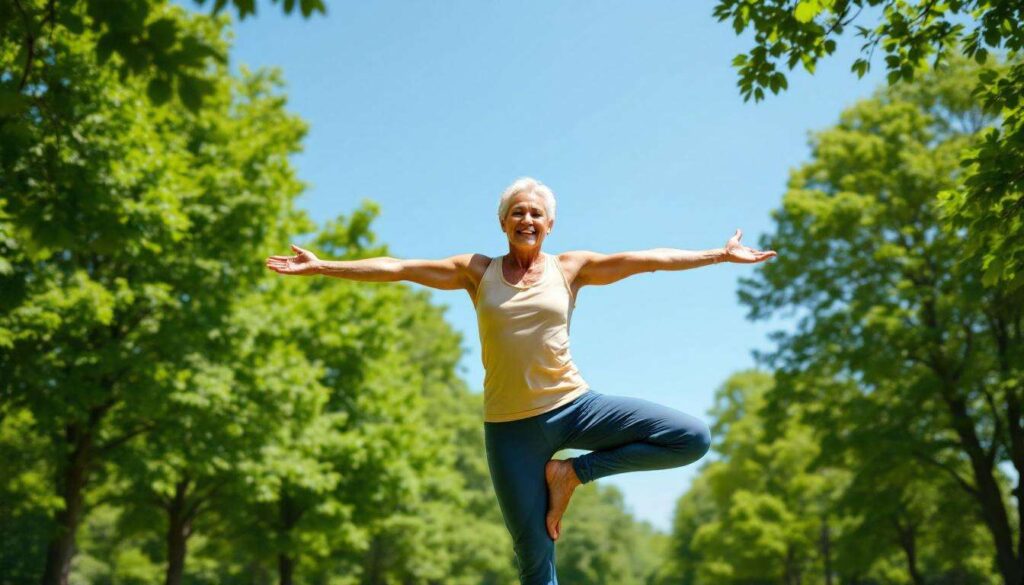
Standing on one leg represents the most basic balance assessment. Lift one foot approximately six inches off the ground while maintaining an upright posture. Keep your lifted knee pointed forward without rotating the hip. Individuals with superior balance should hold this position for 30 seconds or longer on each leg. This pose tests fundamental stability required for activities like climbing stairs or stepping over obstacles.
Tandem stance
The tandem stance involves placing one foot directly in front of the other, heel to toe, forming a straight line. Maintain this position with arms at your sides or crossed over your chest. The narrow base of support challenges lateral stability and requires greater concentration than the single-leg stance. Holding this position for 30 seconds indicates excellent balance control.
Single-leg stance with eyes closed
This advanced variation eliminates visual input, forcing reliance on vestibular and proprioceptive systems alone. Stand on one leg and gently close your eyes while maintaining the position. Most people find this significantly more challenging than the eyes-open version. Achieving 10-15 seconds demonstrates exceptional balance that surpasses typical abilities for the age group.
Semi-tandem stance
Position one foot slightly ahead of the other with the heel of the front foot beside the big toe of the back foot. This intermediate difficulty level between regular standing and full tandem stance provides a useful benchmark. Holding this position for 30 seconds with minimal swaying indicates above-average balance.
| Pose | Target Duration | Primary Challenge |
|---|---|---|
| Single-leg stance | 30+ seconds | Basic stability |
| Tandem stance | 30 seconds | Lateral control |
| Eyes closed single-leg | 10-15 seconds | Non-visual balance |
| Semi-tandem stance | 30 seconds | Moderate stability |
Successfully performing these poses indicates current ability, while regular practice leads to ongoing improvement through specific daily strategies.
Tips for improving balance daily
Enhancing balance requires consistent practice integrated into everyday routines. Small, regular efforts produce more significant improvements than occasional intensive sessions.
Practical daily exercises
Incorporate balance training throughout your normal activities. Stand on one leg while brushing your teeth, alternating legs during the two-minute routine. Practice tandem walking by placing one foot directly in front of the other while moving down a hallway. Perform heel raises while waiting for coffee to brew or during commercial breaks. These brief exercises accumulate throughout the day, providing substantial practice without requiring dedicated workout time.
Strength training for stability
Building muscle strength directly improves balance capabilities. Focus on exercises targeting key muscle groups:
- Squats and lunges for leg strength
- Planks and bird dogs for core stability
- Calf raises for ankle strength
- Hip abduction exercises for lateral stability
- Toe raises for shin strength
Flexibility and mobility work
Maintaining joint mobility supports better balance by allowing fuller range of motion during corrective movements. Gentle stretching of the calves, hamstrings, and hip flexors improves stability. Ankle circles and toe spreads enhance the small muscles responsible for fine balance adjustments. Dedicating 10-15 minutes daily to flexibility work complements strength and balance training.
Progressive challenge
Gradually increase difficulty as balance improves. Begin practicing poses on firm surfaces before progressing to softer surfaces like foam pads or pillows. Add arm movements while holding standing positions. Incorporate head turns to challenge the vestibular system further. This progressive approach builds capabilities systematically without overwhelming the body’s adaptation processes.
Consistent application of these strategies produces lasting improvements that extend well beyond simple pose performance.
The long-term benefits of good balance
Maintaining superior balance after 55 creates cascading positive effects throughout multiple aspects of health and daily living. The advantages extend far beyond fall prevention alone.
Enhanced independence
Excellent balance enables continued participation in activities that define quality of life. Confident navigation of uneven surfaces allows for outdoor recreation and travel. The ability to recover from stumbles prevents minor missteps from becoming serious falls. This physical confidence supports emotional well-being and reduces anxiety about movement.
Cognitive benefits
Balance training engages the brain in complex ways that support cognitive function. The concentration required for maintaining poses strengthens focus and attention. Research indicates that individuals who maintain better balance show slower cognitive decline and reduced dementia risk. The neurological demands of equilibrium exercises create new neural connections that benefit overall brain health.
Social and recreational opportunities
Superior balance opens doors to activities that enhance social connections and life satisfaction:
- Participation in group fitness classes
- Dancing and social events
- Hiking and nature exploration
- Playing with grandchildren
- Traveling without mobility concerns
Healthcare cost reduction
Preventing falls through better balance significantly reduces medical expenses. The average hospital cost for a fall injury exceeds $30,000, not including rehabilitation or long-term care needs. Maintaining balance represents one of the most cost-effective health investments available, requiring no expensive equipment or memberships while delivering substantial returns.
The ability to hold these four standing poses after 55 serves as both an assessment tool and a training goal. Regular testing provides feedback on current capabilities while highlighting areas needing attention. The poses themselves, when practiced consistently, become the training method that improves overall stability. Superior balance translates directly into maintained independence, reduced injury risk, and enhanced quality of life throughout the later decades. Taking time to assess and improve balance represents an investment in long-term health that pays dividends through preserved mobility, confidence, and autonomy.