



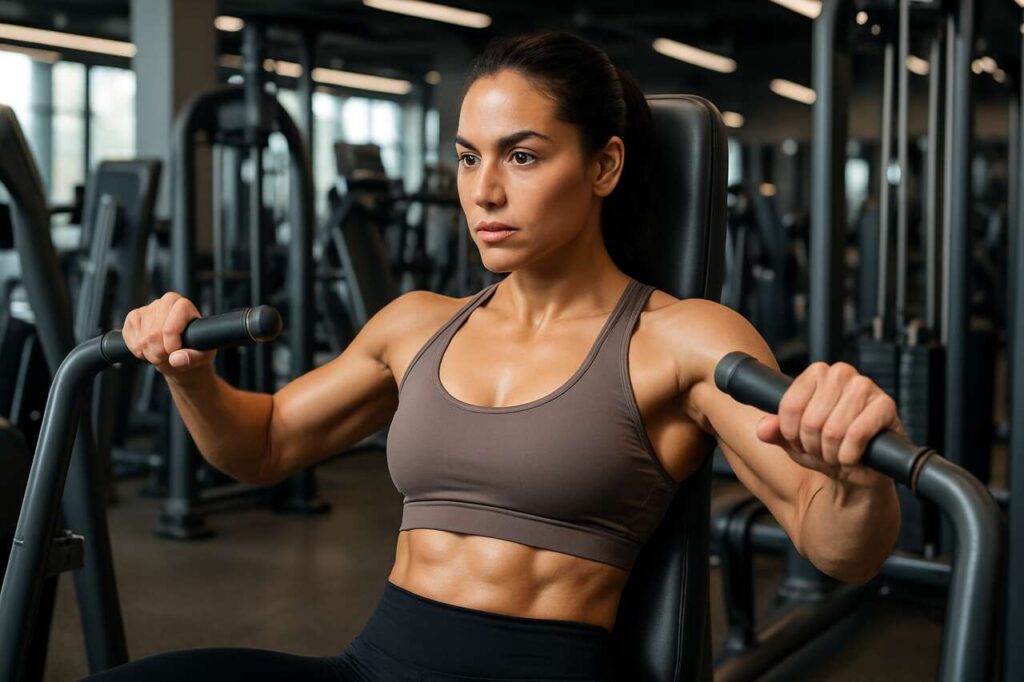
Walking into a gym for the first time can feel overwhelming, with rows of intimidating equipment and experienced lifters moving confidently through their routines. For newcomers, the question isn’t just where to start, but how to start safely and effectively. A certified trainer recommends focusing on just four resistance machine exercises to build full-body strength while minimizing injury risk. This approach offers a structured path forward, allowing beginners to develop proper form, gain confidence, and establish a sustainable fitness routine without the complexity of free weights or advanced techniques.
Introduction to fitness for beginners
Starting a fitness journey requires understanding the fundamentals before diving into complex routines. For those new to strength training, resistance machines provide an accessible entry point that removes many barriers associated with traditional weightlifting. Unlike free weights that demand significant coordination and stabilization, machines guide your movements along predetermined paths, allowing you to focus on the exercise itself rather than balance and form simultaneously.
Why machines matter for newcomers
The gym environment can be intimidating, especially when surrounded by equipment you’ve never used. Resistance machines address this challenge by offering visual instructions and intuitive designs that make learning straightforward. Most machines feature diagrams showing proper positioning, target muscles, and movement patterns. This built-in guidance eliminates much of the guesswork that often discourages beginners from maintaining their fitness routines.
Additionally, machines allow you to isolate specific muscle groups while the equipment handles stabilization. This controlled environment helps you understand how different muscles feel when working, building the mind-muscle connection that becomes crucial as you progress in your training.
Understanding these foundational principles sets the stage for exploring the specific advantages that make resistance machines particularly beneficial for novices.
Benefits of weight machines for novices
Resistance machines offer several distinct advantages that make them ideal for those just beginning their strength training journey. These benefits extend beyond simple ease of use, addressing safety concerns and psychological barriers that often prevent beginners from sticking with their fitness goals.
Safety through guided movement
The most significant advantage of machines is their fixed plane of motion. Unlike barbells or dumbbells that can move in any direction, machines restrict movement to specific paths. This constraint actually becomes a strength for beginners who haven’t yet developed the neuromuscular control needed for free weight exercises. The guided movement pattern reduces the risk of using improper form, which is the primary cause of training-related injuries among novices.
Confidence building through progressive success
Building psychological confidence is just as important as building physical strength. When beginners can successfully complete exercises with proper form, they experience immediate positive reinforcement that encourages continued effort. Machines facilitate this success by removing variables that might otherwise lead to frustration or failure.
- Clear weight increments allow for measurable progress
- Adjustable seats and handles accommodate different body types
- Stable positioning prevents balance-related difficulties
- Reduced intimidation factor compared to free weight areas
Injury prevention for long-term success
Common beginner injuries often result from attempting exercises with weights that exceed current strength levels or using incorrect posture. Machines address both issues by supporting proper alignment and making it easier to select appropriate resistance. The structured support prevents compensatory movements where stronger muscles take over for weaker ones, ensuring balanced development across muscle groups.
With these advantages established, the next critical consideration becomes selecting the right amount of resistance for each exercise.
Choosing weights: a crucial step
Selecting appropriate weight loads represents one of the most important decisions beginners face when starting resistance training. Too light, and you won’t stimulate muscle adaptation; too heavy, and you risk injury or developing poor form habits.
The Goldilocks principle of weight selection
The ideal weight should feel challenging but manageable throughout your set. A useful guideline suggests choosing a weight that allows you to complete your target repetitions with good form while the last two or three repetitions feel difficult. If you can easily perform more repetitions than intended, the weight is too light. Conversely, if you cannot complete your set with proper technique, reduce the load.
Starting conservative and progressing gradually
Beginners should err on the side of caution when first selecting weights. Starting with lighter loads allows you to perfect your technique before adding significant resistance. This approach might feel less impressive initially, but it establishes the foundation for sustainable long-term progress. Most experts recommend beginning with weights at approximately 50-60% of what you think you can handle, then adjusting based on how the exercises feel.
| Signs weight is appropriate | Signs to adjust weight |
|---|---|
| Last 2-3 reps feel challenging | Cannot complete target reps |
| Form remains consistent throughout | Form breaks down mid-set |
| Muscle fatigue without joint pain | Joint discomfort or sharp pain |
| Can control the movement speed | Momentum carries the weight |
Once you’ve mastered weight selection principles, you’re ready to learn the specific exercises that form an effective full-body routine.
The four key exercises to strengthen the whole body
A comprehensive beginner routine doesn’t require dozens of exercises. Four carefully selected machine movements can effectively target all major muscle groups, providing a balanced foundation for overall strength development.
Upper body pushing movement
A chest press machine works the pectorals, shoulders, and triceps through a horizontal pushing motion. This exercise mimics the pattern used in everyday activities like pushing open doors or moving furniture. Position yourself so the handles align with mid-chest level, press forward smoothly, and return with control. This movement builds functional upper body strength while developing the muscles visible in your chest and arms.
Upper body pulling movement
The lat pulldown machine targets the back muscles, particularly the latissimus dorsi, along with the biceps and rear shoulders. This vertical pulling motion balances the pushing exercise and helps develop posture-supporting muscles. Grip the bar slightly wider than shoulder-width, pull down toward your upper chest, and release slowly. Strong back muscles are essential for maintaining proper posture and preventing shoulder injuries.
Lower body compound movement
A leg press machine engages the quadriceps, hamstrings, and glutes through a powerful pushing motion. This exercise builds lower body strength crucial for daily activities like climbing stairs or standing from seated positions. Position your feet hip-width apart on the platform, press through your heels, and control the descent. The leg press offers significant muscle-building potential while protecting the lower back through its supported position.
Core stabilization exercise
An abdominal machine provides targeted core strengthening that supports all other movements. Strong core muscles improve balance, protect the spine, and enhance overall athletic performance. Follow the machine’s guidance for proper positioning, engage your abdominal muscles to create movement, and avoid using momentum. Core strength forms the foundation for progression to more advanced exercises.
Knowing the exercises is only part of the equation; executing them effectively requires attention to several important factors.
Tips to maximize your sessions
Getting the most from your gym time involves more than simply performing exercises. Strategic approaches to training frequency, technique, and recovery can dramatically improve your results.
Optimal training frequency
Research consistently shows that two resistance training sessions per week provide substantial benefits for beginners. This frequency allows adequate recovery time between workouts while maintaining consistent stimulus for muscle adaptation. Spacing sessions three to four days apart gives muscles time to repair and strengthen. More frequent training isn’t necessarily better for novices, as recovery is when actual strength gains occur.
Technique over weight every time
The temptation to add weight quickly can undermine long-term progress. Prioritizing perfect form with lighter weights builds better movement patterns than struggling with excessive loads. Focus on controlled movements, full range of motion, and consistent tempo. Each repetition should look identical to the previous one. When form begins deteriorating, the set should end regardless of target repetition count.
- Move through the full range of motion the machine allows
- Control both the lifting and lowering phases of each rep
- Breathe consistently, exhaling during exertion
- Pause briefly at the top of each movement
- Avoid using momentum to move the weight
Progressive overload principles
Continuous improvement requires gradually increasing training demands. Once you can comfortably complete your target repetitions with good form, it’s time to progress. Add small weight increments, increase repetitions, or reduce rest periods between sets. Tracking your workouts in a notebook or app helps identify when progression is appropriate and maintains motivation through visible improvement records.
These technical considerations work hand-in-hand with the mental aspects of establishing a lasting gym habit.
Building confidence and perseverance at the gym
Physical transformation begins with mental commitment. Developing the psychological resilience to maintain a fitness routine often proves more challenging than the workouts themselves.
Celebrating small victories
Every completed workout represents progress, regardless of weight lifted or repetitions performed. Acknowledging these achievements reinforces the habit and builds self-efficacy. Keep a record of your sessions, noting not just numbers but how you felt and any improvements in form or confidence. These documented victories become powerful motivation during inevitable periods of low enthusiasm.
Understanding the adaptation timeline
Realistic expectations prevent discouragement. Initial strength gains occur within weeks as your nervous system becomes more efficient at recruiting muscle fibers. Visible physical changes typically appear after several weeks of consistent training. Patience during this adaptation period separates those who achieve lasting results from those who abandon their goals prematurely.
Creating sustainable routines
Consistency trumps intensity for beginners. Scheduling specific days and times for gym visits, preparing workout clothes in advance, and treating sessions as non-negotiable appointments all support habit formation. Starting with manageable commitments that fit realistically into your lifestyle increases the likelihood of long-term adherence.
A simple four-exercise machine routine provides newcomers with everything needed to begin building strength safely and effectively. By focusing on proper technique, appropriate weight selection, and consistent effort twice weekly, beginners can develop both physical capabilities and mental confidence. The structured support of resistance machines removes many barriers that discourage novices, creating an accessible path toward improved fitness. This foundation prepares you for future progression while delivering meaningful health benefits including enhanced muscle strength, improved bone density, and better metabolic function. Success in fitness starts not with complex programs but with showing up consistently and mastering the fundamentals.