



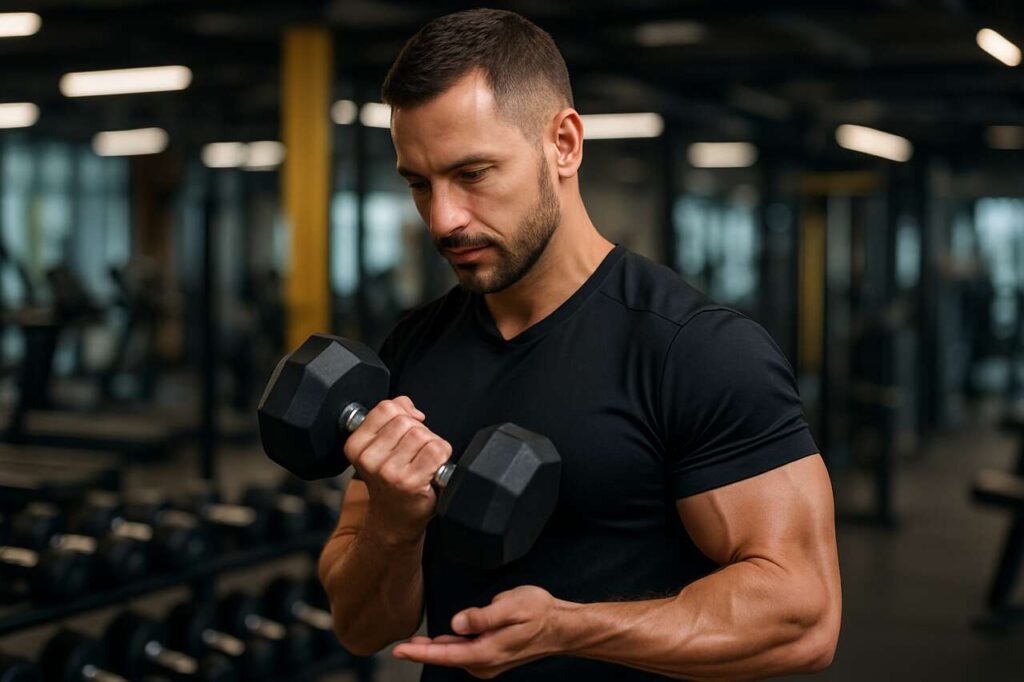
Building strong, muscular arms requires more than random exercises and wishful thinking. A certified strength-training specialist has identified five essential dumbbell movements that deliver proven results for anyone looking to develop powerful upper limbs. These exercises target all major muscle groups in the arms, from biceps to triceps to shoulders, creating a comprehensive approach to arm development. Whether you’re new to resistance training or looking to refine your routine, these movements form the foundation of effective arm strengthening.
Introduction to dumbbell training
Why dumbbells are essential training tools
Dumbbells represent one of the most versatile and accessible pieces of equipment available for strength training. Unlike machines that lock you into fixed movement patterns, dumbbells allow for natural range of motion that accommodates individual body mechanics. This freedom of movement engages stabilizing muscles throughout each exercise, creating more functional strength that translates to everyday activities.
The beauty of dumbbell training lies in its simplicity and effectiveness. You don’t need an expensive gym membership or elaborate equipment setup to achieve remarkable results. A pair of quality dumbbells can transform any space into a productive training environment, making consistency easier to maintain.
Getting started with proper weight selection
Choosing the right weight is crucial for maximizing results while minimizing injury risk. For most beginners, starting with 8 to 10 pounds (approximately 3.6 to 4.5 kg) provides an appropriate challenge without compromising form. The selected weight should allow you to complete all prescribed repetitions while maintaining proper technique throughout the entire set.
As strength increases over time, progressive overload becomes essential. This means gradually increasing the weight, repetitions, or sets to continue challenging your muscles and promoting growth.
Understanding these fundamentals sets the stage for exploring the specific advantages that dumbbell exercises offer over other training methods.
The benefits of dumbbell exercises
Muscle balance and symmetry development
One of the most significant advantages of dumbbell training is its ability to address muscle imbalances. When using a barbell, the dominant side often compensates for the weaker side, perpetuating strength discrepancies. Dumbbells force each arm to work independently, ensuring equal development on both sides of the body.
This bilateral training approach creates more symmetrical muscle development and reduces the risk of compensation patterns that can lead to injury. Over time, this balanced development improves overall functional capacity and athletic performance.
Enhanced stabilization and core engagement
Dumbbell exercises require greater stabilization than their machine-based counterparts. This increased demand activates core muscles and smaller stabilizing muscles throughout the body, creating a more comprehensive training effect. The result is improved coordination, balance, and overall body control.
Practical applications beyond the gym
The strength gained from dumbbell training directly translates to daily activities. Consider these real-world benefits:
- Carrying groceries or luggage becomes noticeably easier
- Lifting children or pets requires less effort and strain
- Household tasks like moving furniture feel more manageable
- Improved posture reduces back and neck discomfort
- Enhanced confidence in physical capabilities
These functional improvements demonstrate why dumbbell training extends far beyond aesthetic goals. With these benefits established, let’s examine the first essential exercise for building powerful arms.
Exercise 1: biceps curl to press
Movement mechanics and muscle activation
The biceps curl to press combines two fundamental movements into one compound exercise that maximizes efficiency. This movement begins with a standard biceps curl, then transitions seamlessly into an overhead press, engaging both the biceps and deltoids in a single fluid motion. This combination creates a time-efficient workout that builds strength across multiple muscle groups simultaneously.
Proper execution technique
Start by standing with feet shoulder-width apart, holding dumbbells at your sides with palms facing forward. Curl the weights toward your shoulders, keeping elbows close to your body. At the top of the curl, rotate your palms to face forward and press the dumbbells overhead until arms are fully extended. Reverse the movement with control, lowering the weights back to starting position.
Programming recommendations
| Parameter | Recommendation |
|---|---|
| Sets | 3 |
| Repetitions | 10-12 |
| Rest period | 30-45 seconds |
| Frequency | 2-3 times per week |
Maintaining proper form throughout all repetitions ensures maximum benefit while protecting joints from unnecessary stress. While this exercise builds the front of the arms, the next movement targets the often-neglected back of the upper arm.
Exercise 2: triceps kickback
Isolation benefits for triceps development
The triceps kickback provides focused isolation of the triceps muscle, which comprises approximately two-thirds of upper arm mass. This exercise effectively targets all three heads of the triceps, creating the definition and strength necessary for complete arm development. Unlike compound movements, this isolation allows for concentrated effort on the posterior arm muscles.
Step-by-step execution guide
Begin by placing one knee and hand on a bench for support, keeping your back flat and parallel to the ground. Hold a dumbbell in the opposite hand with your upper arm parallel to your torso and elbow bent at 90 degrees. Extend the elbow, straightening the arm completely while keeping the upper arm stationary. Squeeze the triceps at full extension before slowly returning to the starting position.
Common mistakes to avoid
- Swinging the weight using momentum instead of controlled muscle contraction
- Allowing the upper arm to drop below parallel during extension
- Using excessive weight that compromises form quality
- Rushing through repetitions without proper muscle engagement
Following the prescribed 3 sets of 10-12 repetitions with 30-45 seconds rest between sets produces optimal results. After strengthening the arms, attention must turn to the shoulders for complete upper body development.
Exercise 3: lateral raise
Shoulder development and stability
Lateral raises specifically target the medial deltoid, the middle portion of the shoulder muscle responsible for creating width and definition. Strong deltoids contribute significantly to overall arm appearance while providing essential joint stability that protects against injury during other exercises and daily activities.
Correct form and execution
Stand with feet hip-width apart, holding dumbbells at your sides with palms facing inward. Keeping a slight bend in your elbows, raise the weights out to the sides until arms reach shoulder height, forming a “T” shape with your body. The movement should be controlled and deliberate, avoiding any jerking or swinging motion. Pause briefly at the top before lowering with control.
Why shoulder strength matters
Building balanced shoulder musculature creates a foundation for numerous physical activities. Strong shoulders improve performance in activities ranging from swimming to tennis, while also enhancing posture and reducing the rounded-shoulder position common in desk workers. This structural stability supports better movement patterns throughout the entire upper body.
With shoulders addressed, returning focus to the biceps from a different angle provides additional development opportunities.
Exercise 4: hammer curl
Unique angle for comprehensive biceps development
The hammer curl variation engages the biceps from a neutral grip position, emphasizing different muscle fibers than traditional curls. This grip specifically targets the brachialis and brachioradialis muscles, which lie beneath and alongside the biceps, contributing to overall arm thickness and strength.
Execution technique
Hold dumbbells at your sides with palms facing your body throughout the entire movement. Curl the weights toward your shoulders while maintaining this neutral grip position, keeping elbows stationary at your sides. The motion resembles hammering a nail, hence the exercise name. Focus on controlled movement without swinging or using body momentum.
Integration with other biceps work
Hammer curls complement traditional biceps curls by addressing different aspects of arm development. Including both variations in your routine ensures complete muscle fiber recruitment and prevents adaptation plateaus. This comprehensive approach accelerates strength gains and creates more balanced arm development.
Completing the arm-building program requires one final triceps movement for complete posterior arm development.
Exercise 5: overhead triceps extension
Long head triceps activation
The overhead triceps extension uniquely emphasizes the long head of the triceps, the largest of the three triceps heads. This muscle portion responds particularly well to overhead movements, making this exercise essential for complete triceps development. The stretched position at the bottom of the movement creates significant muscle tension that stimulates growth.
Proper form considerations
This exercise can be performed standing or seated with equal effectiveness. Hold a single dumbbell with both hands, extending it overhead with arms fully straightened. Lower the weight behind your head by bending at the elbows while keeping upper arms stationary and close to your head. Extend back to the starting position, focusing on triceps contraction throughout the movement. Maintaining a straight back position prevents unnecessary strain on the lower back.
Safety and progression
Start with lighter weight to master the movement pattern before progressing to heavier loads. The overhead position requires shoulder mobility and stability, so proper warm-up becomes particularly important. As strength increases, gradually increase weight while maintaining strict form standards.
Performing these five exercises consistently creates a comprehensive arm-training program that addresses all major muscle groups.
These five dumbbell exercises provide a complete framework for building strong, muscular arms through targeted, efficient movements. The biceps curl to press and hammer curl develop the front of the arms from multiple angles, while triceps kickbacks and overhead extensions ensure complete posterior development. Lateral raises create the shoulder stability and width necessary for balanced upper body strength. Implementing this routine two to three times weekly with proper weight selection and form produces measurable improvements in both strength and muscle development. The functional benefits extend beyond aesthetics, enhancing everyday activities and reducing injury risk through improved muscle balance and joint stability. Consistency with these fundamental movements creates the foundation for long-term arm strength and development.