



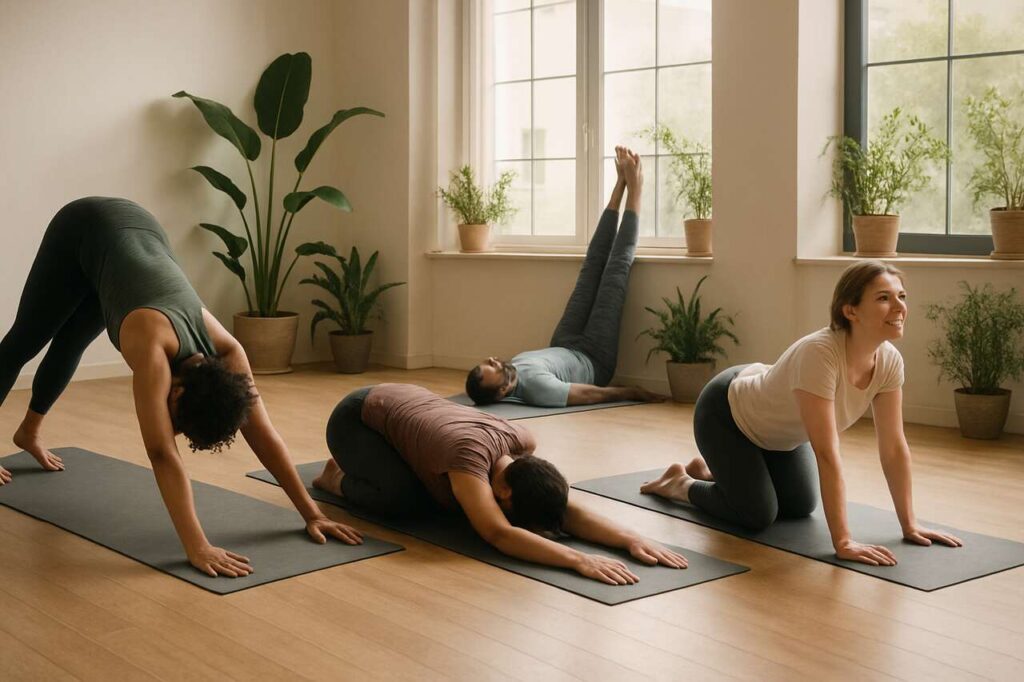
The holiday season brings joy and celebration, but it also delivers a significant dose of stress for many people. Between shopping for gifts, preparing elaborate meals, hosting family gatherings, and managing year-end work deadlines, the festive period can quickly become overwhelming. Fortunately, ancient practices offer modern solutions to contemporary problems. Yoga provides accessible techniques to counteract seasonal anxiety, requiring nothing more than a quiet space and a few minutes of dedicated time. A certified yoga instructor recently shared four specific poses designed to release physical tension and calm mental turbulence during this demanding time of year.
Discover the benefits of yoga for stress reduction
How yoga affects the nervous system
Yoga operates as a powerful stress-management tool by directly influencing the body’s physiological response to pressure. When practiced regularly, these ancient techniques trigger the parasympathetic nervous system, which counteracts the fight-or-flight response that stress activates. This biological shift creates measurable changes in the body, including reduced heart rate, lowered blood pressure, and decreased production of cortisol, the primary stress hormone.
Research consistently demonstrates that individuals who maintain a yoga practice experience significantly lower cortisol levels compared to those who don’t engage in such activities. This hormonal regulation proves particularly valuable during high-stress periods when emotional reactivity tends to increase. The combination of controlled breathing, intentional movement, and focused attention creates a holistic approach to stress management that addresses both physical and psychological dimensions of anxiety.
Physical and mental advantages of regular practice
Beyond hormonal regulation, yoga delivers numerous benefits that compound over time. Practitioners often report improvements in several key areas:
- Enhanced flexibility and reduced muscle tension throughout the body
- Improved sleep quality and duration, which directly affects stress resilience
- Better concentration and mental clarity during demanding situations
- Increased body awareness that helps identify stress signals earlier
- Strengthened immune function, which often weakens under chronic stress
The beauty of yoga lies in its accessibility. Unlike many stress-reduction methods that require expensive equipment or specialized facilities, yoga can be practiced anywhere with minimal resources. Even five minutes in a restorative pose can produce noticeable effects on psychological well-being, making it an ideal practice for busy individuals navigating hectic schedules.
Understanding these foundational benefits provides context for why specific poses prove particularly effective during challenging times like the holiday season.
Understand why the holidays can be stressful
Common holiday stressors and triggers
The festive season creates a perfect storm of stress-inducing factors that converge simultaneously. Financial pressures intensify as people stretch budgets to purchase gifts, travel to visit relatives, and host elaborate gatherings. Time constraints multiply as regular responsibilities continue while additional seasonal obligations pile on top. Social expectations create pressure to maintain cheerful appearances even when feeling overwhelmed or exhausted.
Family dynamics add another layer of complexity. Gatherings that bring together relatives with different values, lifestyles, or unresolved conflicts can generate significant emotional strain. The expectation of perfect holiday experiences often clashes with messy reality, creating disappointment and frustration. For many people, the season also triggers grief related to absent loved ones or memories of past difficulties.
Physical manifestations of seasonal anxiety
Holiday stress doesn’t remain purely psychological. The body responds to emotional pressure with tangible symptoms that can significantly impact quality of life:
| Physical Symptom | Common Trigger | Impact Level |
|---|---|---|
| Digestive discomfort | Overeating rich foods | Moderate to High |
| Muscle tension | Emotional stress and poor posture | High |
| Sleep disruption | Racing thoughts and irregular schedules | High |
| Headaches | Tension and dehydration | Moderate |
| Fatigue | Overcommitment and poor rest | Very High |
Recognizing these stress triggers represents the first step toward managing them effectively. Keeping a simple journal during gatherings helps identify specific situations or interactions that provoke strong emotional reactions. This awareness enables proactive planning and the implementation of coping strategies, including targeted yoga practices designed to address specific stress manifestations.
With this understanding of why holidays prove so challenging, exploring specific poses that counteract these effects becomes particularly relevant.
Supported bound angle pose for relaxation
Physical setup and positioning
The supported bound angle pose, known in Sanskrit as Supta Baddha Konasana, creates a gentle opening through the chest, hips, and inner thighs while supporting complete relaxation. This restorative position requires minimal effort once properly arranged, allowing the body to release accumulated tension without strain.
To establish the pose correctly, gather the necessary props before beginning. A long cushion, bolster, or stacked pillows provides back support, while yoga blocks or folded blankets support the thighs. Position the bolster lengthwise behind you, with one end near your lower back. Sit in front of the support, then bring the soles of your feet together, allowing your knees to fall naturally toward the floor. Place blocks or folded blankets under each thigh to prevent straining the hip joints.
Slowly recline backward onto the support, adjusting its position until your spine rests comfortably along its length. Your head should rest higher than your heart, creating a gentle opening across the chest. Allow your arms to rest by your sides with palms facing upward in a receptive position. Close your eyes and consciously relax your jaw, which often holds considerable tension.
Therapeutic benefits and breathing techniques
This pose delivers multiple therapeutic benefits that directly address holiday stress. The chest opening promotes deeper breathing, which immediately signals the nervous system to shift from stress response to relaxation mode. The hip opening releases tension that accumulates from prolonged sitting or standing during holiday preparations. The supported position eliminates the need for muscular effort, allowing complete surrender.
Digestive benefits make this pose particularly valuable after indulgent holiday meals. The gentle opening through the abdomen supports healthy digestion and can relieve feelings of fullness or discomfort. The pose also encourages lymphatic drainage, supporting the body’s natural detoxification processes.
Remain in this position for eight to ten minutes, focusing on natural, unforced breathing. If the mind wanders to stressful thoughts, gently redirect attention to physical sensations or breath movement. This extended hold time allows the nervous system to fully transition into a parasympathetic state, creating lasting effects that extend beyond the practice session.
After experiencing this profound opening, transitioning to a forward-folding position offers complementary benefits.
Child’s pose to calm the mind
Entering and modifying the position
Child’s pose serves as one of yoga’s most accessible and comforting positions, offering a sense of safety and introspection that proves especially valuable during overwhelming moments. This gentle forward fold requires no special equipment and can be practiced almost anywhere, making it ideal for quick stress relief during busy holiday schedules.
Begin by kneeling on a comfortable surface with your knees either together or separated to hip-width distance. Sit back on your heels, then slowly fold forward, extending your arms either straight ahead with palms down or resting alongside your body with palms facing upward. Rest your forehead on the floor or on a folded blanket if that feels more comfortable. Allow your entire body weight to release downward, supported by the earth beneath you.
Modifications accommodate various body types and flexibility levels:
- Place a folded blanket between your hips and heels if sitting back creates knee discomfort
- Widen your knees to create space for your torso if breathing feels restricted
- Stack your fists and rest your forehead on them if reaching the floor proves difficult
- Position a bolster lengthwise between your thighs for additional support
Mental and emotional calming effects
Child’s pose creates a cocoon-like environment that naturally encourages inward focus and mental quieting. The forward fold gently compresses the abdomen, which stimulates the vagus nerve and promotes relaxation responses throughout the body. This position also reduces sensory input by limiting visual stimulation, helping an overstimulated nervous system to settle.
The pose works particularly well for calming racing thoughts that often accompany holiday stress. The gentle pressure on the forehead activates pressure points associated with relaxation, while the surrendered position symbolically represents letting go of control. Many practitioners find this pose emotionally soothing, as it mimics the fetal position associated with safety and comfort.
Hold the position for anywhere from one to five minutes, breathing naturally and allowing thoughts to pass without engagement. When ready to exit, slowly walk your hands back toward your body and rise gradually to prevent dizziness. The grounding quality of this pose provides an excellent foundation before exploring inversions that offer different therapeutic benefits.
Speaking of inversions, a gentle option provides remarkable tension relief without requiring advanced skills.
Legs-up-the-wall technique to relieve tension
Proper alignment and setup
The legs-up-the-wall pose offers the benefits of inversion without requiring balance or strength. This accessible position reverses the typical effects of gravity on the body, promoting circulation and providing a refreshing perspective shift that mirrors its physical benefits with mental ones.
To establish the pose, you’ll need clear wall space and optionally a folded blanket or small cushion. Sit sideways next to the wall with your hip touching it. In one smooth movement, swing your legs up the wall as you lower your torso to the floor, ending with your sitting bones close to the wall base. Your body should form an L-shape, with legs extended vertically and torso perpendicular to them.
Fine-tune the position by adjusting your distance from the wall. If hamstrings feel strained, move slightly away from the wall or bend your knees slightly. Place a folded blanket under your hips to create a gentle elevation that enhances circulation benefits. Rest your arms in a comfortable position, either out to the sides or on your belly.
Circulatory and nervous system benefits
This gentle inversion delivers impressive physiological benefits with minimal effort. Elevating the legs above the heart facilitates venous blood return, reducing swelling in the feet and ankles that often results from prolonged standing during holiday preparations. The position also helps drain lymphatic fluid, supporting immune function and reducing inflammation.
The pose creates a mild stretch through the backs of the legs, releasing tension that accumulates in the hamstrings and calves. More significantly, the inversion triggers the relaxation response by signaling the nervous system that the body is in a safe, restful state. Blood flow to the brain increases slightly, which can relieve mental fatigue and improve clarity.
Remain in this position for five to fifteen minutes, allowing the body to fully absorb the benefits. Some practitioners experience tingling in the legs as circulation adjusts, which is normal. Exit the pose slowly by bending your knees, rolling to one side, and pausing before sitting up to prevent lightheadedness. The refreshed sensation following this pose provides excellent preparation for a final twisting movement that completes a comprehensive stress-relief sequence.
Completing this restorative sequence with a spinal twist offers a satisfying sense of release throughout the entire body.
Supine twist for complete release
Executing the twist safely
The supine twist provides a gentle spinal rotation that releases tension throughout the back, shoulders, and hips while offering a mild massage to internal organs. This pose serves as an excellent conclusion to a stress-relief sequence, creating a sense of wringing out accumulated tension and finishing with renewed ease.
Lie on your back with your knees bent and feet flat on the floor. Extend your arms out to the sides at shoulder height, forming a T-shape with your body. Draw your knees toward your chest, then slowly lower them to one side while keeping your shoulders grounded. Turn your head in the opposite direction of your knees to deepen the spinal twist. If your knees don’t reach the floor comfortably, place a folded blanket or cushion beneath them for support.
Key alignment principles ensure safety and effectiveness:
- Keep both shoulders pressing toward the floor rather than allowing the upper shoulder to lift
- Maintain bent knees rather than straightening the legs, which intensifies the twist beyond restorative levels
- Adjust the distance your knees travel based on your spine’s comfort level
- Breathe deeply into the side body, which stretches with each inhalation
Digestive and detoxification support
Beyond releasing muscular tension, the supine twist offers specific benefits for digestion and detoxification. The gentle compression and release of the abdominal area stimulates digestive organs, promoting healthy function and relieving discomfort from overeating. This makes the pose particularly valuable after heavy holiday meals.
The twisting action also supports the body’s natural detoxification processes by encouraging movement through the digestive tract and promoting lymphatic drainage. The alternating compression and expansion creates a wringing effect that some practitioners describe as cleansing. Combined with deep breathing, this pose helps release not only physical tension but also emotional holding patterns that manifest in the torso.
Hold each side for three to five minutes, allowing gravity to deepen the twist naturally without forcing. Notice how the body gradually releases into the position over time. When switching sides, return to center with bent knees, pause briefly, then repeat on the opposite side. This balanced approach ensures even release throughout the spine and surrounding tissues.
After completing both sides, draw your knees to your chest and rock gently side to side, massaging the lower back. Extend your legs and rest in a neutral position for several breaths before slowly returning to sitting, carrying the sense of release into the remainder of your day.
The holiday season challenges even the most resilient individuals with its unique combination of joy and stress. These four yoga poses offer practical tools for managing seasonal anxiety without requiring significant time investment or specialized equipment. The supported bound angle pose opens the body and encourages deep breathing, while child’s pose provides mental quieting and emotional comfort. Legs-up-the-wall reverses gravitational effects and refreshes circulation, and the supine twist completes the sequence with comprehensive release throughout the spine and digestive system. Together, these accessible practices create a powerful antidote to holiday stress, supporting both physical comfort and mental clarity during demanding times. Regular practice, even in brief sessions, builds resilience that extends beyond the yoga mat into daily life, helping navigate seasonal challenges with greater ease and presence.