



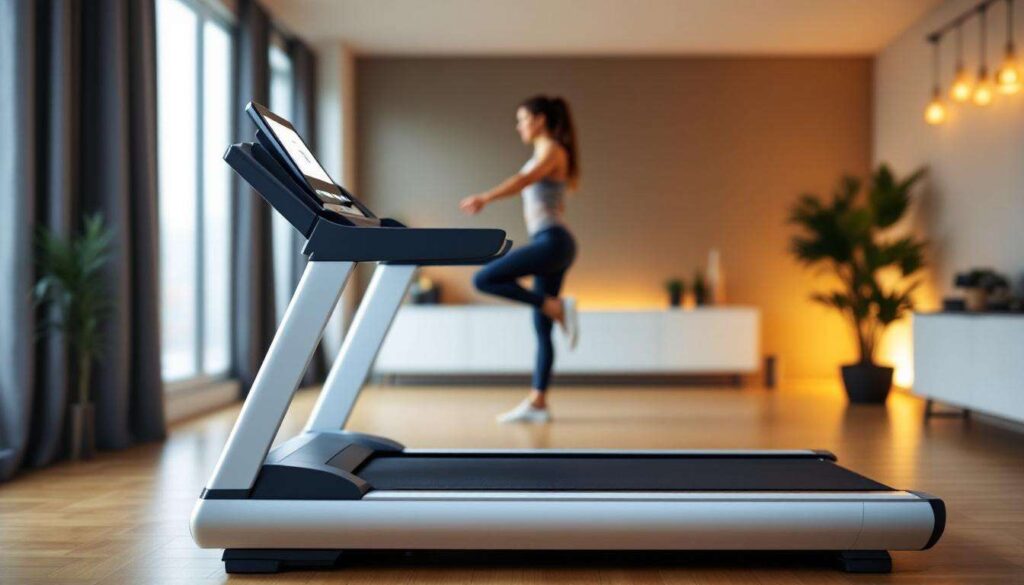
Maintaining physical fitness requires more than just cardiovascular endurance. Balance, coordination, and mobility form the foundation of functional movement, helping prevent falls and injuries while improving overall quality of life. A treadmill offers a controlled environment to develop these essential skills through targeted exercises. Physical therapists increasingly recommend specific treadmill variations that challenge the body beyond simple forward walking, providing comprehensive benefits that extend far beyond traditional cardio workouts.
The importance of a good warm-up on a treadmill
Preparing your body for movement
Beginning any treadmill session with a proper warm-up is essential for injury prevention and optimal performance. A gradual warm-up increases blood flow to muscles, elevates core temperature, and prepares joints for the demands of exercise. Starting at a comfortable walking pace for five to ten minutes allows your cardiovascular system to adjust while reducing the risk of muscle strains or joint discomfort.
Elements of an effective warm-up
A comprehensive treadmill warm-up should include several key components:
- Start at a slow pace of 1.5 to 2.0 miles per hour
- Gradually increase speed every two minutes
- Focus on natural arm swing and upright posture
- Maintain steady breathing throughout the warm-up period
- Reach a moderate pace before introducing variations
Monitoring readiness indicators
Your body provides clear signals when adequately warmed up. These include increased heart rate, slight perspiration, and muscles that feel loose and responsive. The warm-up phase also offers an opportunity to check treadmill settings, ensure the safety clip is properly attached, and mentally prepare for the exercises ahead.
Once your body is properly prepared, you can begin incorporating specific exercises that target balance and stability.
Incline exercise: walking to enhance balance
The mechanics of incline walking
Walking on an incline transforms a standard treadmill session into a powerful balance-building exercise. Elevating the treadmill deck forces your body to adjust its center of gravity, engaging core muscles and lower body stabilizers more intensely than flat walking. This simple modification recruits additional muscle groups while improving proprioception.
Progressive incline training
| Week | Incline Level | Duration | Speed (mph) |
|---|---|---|---|
| 1-2 | 2-3% | 3 minutes | 2.0-2.5 |
| 3-4 | 4-5% | 4 minutes | 2.0-2.5 |
| 5-6 | 6-8% | 5 minutes | 2.0-3.0 |
Benefits beyond balance
Incline walking delivers multiple advantages for overall fitness. It strengthens the posterior chain, including glutes, hamstrings, and calves, while reducing impact stress on joints compared to running. The elevated position also improves ankle flexibility and challenges the vestibular system, which controls balance and spatial orientation. Individuals who regularly practice incline walking report greater confidence when navigating stairs and uneven outdoor terrain.
Building on this foundation of improved balance, the next exercise introduces a completely different movement pattern.
Backward walking: challenging coordination differently
Reversing your perspective
Backward walking on a treadmill represents a significant coordination challenge that activates muscle groups often neglected during forward movement. This exercise requires heightened concentration and body awareness, forcing the brain to create new neural pathways while improving spatial reasoning. The unfamiliar movement pattern strengthens quadriceps more effectively than forward walking and places different demands on balance systems.
Safety protocols for backward walking
Given the unconventional nature of this exercise, safety precautions are paramount:
- Always attach the magnetic safety clip to your clothing
- Start at an extremely slow speed of 0.8 to 1.0 miles per hour
- Hold handrails initially until comfortable with the movement
- Keep sessions brief, beginning with one to two minutes
- Ensure clear space around the treadmill
- Never attempt backward walking at speeds exceeding 2.0 miles per hour
Neuromuscular adaptations
Research indicates that backward walking improves knee stability and reduces anterior knee pain in some individuals. The exercise strengthens muscles surrounding the knee joint from different angles, creating more balanced muscular development. Additionally, backward walking enhances cognitive function by requiring simultaneous coordination of movement, balance, and spatial awareness, making it particularly valuable for older adults seeking to maintain mental sharpness.
While backward walking challenges coordination in the sagittal plane, lateral movements address different aspects of mobility.
Lateral steps: effectively boosting mobility
The power of sideways movement
Lateral stepping on a treadmill targets the often-neglected frontal plane of movement, where side-to-side motion occurs. This exercise activates hip abductors and adductors, muscles crucial for stability during everyday activities like getting in and out of cars or navigating crowded spaces. The lateral shuffle strengthens the gluteus medius, a key stabilizer that prevents hip drop during single-leg stance.
Proper lateral stepping technique
Executing lateral steps correctly maximizes benefits while minimizing injury risk. Face perpendicular to the treadmill direction, maintaining an athletic stance with knees slightly bent and core engaged. Step sideways with the lead foot, then bring the trailing foot to meet it without crossing your legs. Keep your torso upright and avoid leaning toward the direction of travel. Switch sides after 90 seconds to two minutes to ensure balanced development.
Mobility improvements and functional benefits
| Benefit Category | Specific Improvements |
|---|---|
| Hip mobility | Increased range of motion, reduced stiffness |
| Ankle stability | Better lateral support, reduced sprain risk |
| Core strength | Enhanced rotational control, improved posture |
| Athletic performance | Quicker direction changes, better agility |
Lateral steps particularly benefit individuals recovering from hip or knee injuries, as the controlled environment allows gradual progression without the unpredictability of outdoor surfaces.
Understanding these individual exercises is valuable, but their true potential emerges when systematically integrated into regular training.
Incorporating these exercises into a daily routine
Creating a balanced treadmill workout
A comprehensive treadmill session should combine all four exercises in a structured sequence that builds intensity gradually. Begin with the five to ten minute warm-up at a comfortable forward walking pace. Follow with three to five minutes of incline walking to activate stabilizing muscles. Transition to backward walking for two to three minutes, then perform lateral steps for two minutes on each side. This sequence totals approximately 20 to 30 minutes, fitting easily into busy schedules.
Weekly progression framework
Sustainable improvement requires progressive overload without overwhelming the body. Consider this approach:
- Week one: perform the routine three times, focusing on form
- Week two: increase duration of each exercise by 30 seconds
- Week three: add a second set of the complete sequence
- Week four: slightly increase speed on exercises where comfortable
- Ongoing: continue gradual increases while monitoring recovery
Tracking progress and adjusting variables
Maintaining a simple log helps identify improvements and prevent plateaus. Record the date, duration of each exercise, speed settings, incline levels, and subjective difficulty ratings. This data reveals patterns and guides adjustments. If an exercise feels significantly easier after two weeks, increase the challenge by extending duration, raising speed, or elevating incline. Conversely, if persistent discomfort occurs, reduce intensity and consult a healthcare professional.
Complementary activities for enhanced results
While treadmill exercises provide substantial benefits, combining them with other activities creates comprehensive fitness development. Strength training twice weekly builds muscle mass that supports balance. Flexibility work through stretching or yoga maintains range of motion. Balance-specific exercises like single-leg stands complement treadmill training by challenging stability in static positions.
These varied exercises on a treadmill offer accessible methods to develop crucial physical capabilities. Consistent practice of incline walking, backward movement, and lateral steps strengthens the body’s ability to maintain equilibrium and move efficiently through space. The controlled environment reduces barriers to entry while providing measurable progress. By dedicating just 20 to 30 minutes several times weekly, individuals can experience meaningful improvements in balance, coordination, and mobility that translate directly to enhanced daily function and reduced injury risk.