



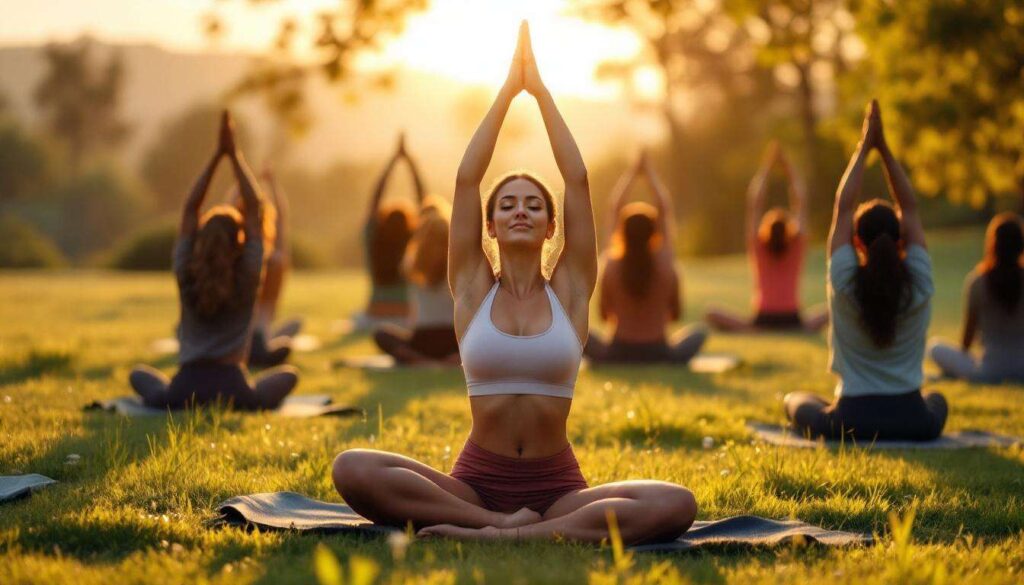
Stiff hips affect millions of people who spend hours sitting at desks, driving, or maintaining sedentary lifestyles. This common issue leads to discomfort, reduced mobility, and even lower back pain. The good news is that yoga offers a natural, accessible solution that requires nothing more than your body and a few minutes each day. Through targeted movements and mindful stretching, you can restore flexibility and ease tension without expensive equipment or gym memberships.
Introduction to yoga for the hips
Understanding hip stiffness and its causes
Hip stiffness develops when the muscles surrounding the hip joints become tight and restricted. The hip flexors, which connect the thighs to the pelvis, are particularly vulnerable to tightness from prolonged sitting. Modern lifestyles create a perfect storm for hip problems, as most people spend between eight and twelve hours daily in seated positions. This constant flexion shortens the hip flexors and weakens the surrounding muscles, creating an imbalance that manifests as stiffness, reduced range of motion, and compensatory pain in the lower back and knees.
Several factors contribute to hip stiffness beyond sedentary behavior:
- Repetitive movements from certain sports or occupations
- Previous injuries that have healed with scar tissue
- Age-related loss of flexibility in connective tissues
- Muscular imbalances from favoring one side of the body
- Stress and tension that cause unconscious muscle clenching
How yoga addresses hip mobility
Yoga provides a comprehensive approach to hip health by combining stretching, strengthening, and awareness. Unlike static stretching alone, yoga poses engage multiple muscle groups simultaneously while encouraging proper alignment and breath work. This holistic method not only lengthens tight muscles but also builds stability in the joints. The practice teaches your body to move through full ranges of motion while maintaining control, which translates to improved functionality in daily activities.
The beauty of yoga for hip flexibility lies in its adaptability. Each pose can be modified to match your current ability level, making it accessible whether you’re dealing with severe stiffness or simply want to maintain healthy hips. Consistent practice creates lasting changes in tissue elasticity and joint mobility, with many practitioners noticing improvements within just two to three weeks of daily practice.
Understanding these foundational concepts sets the stage for exploring specific movements that target hip stiffness effectively.
Essential yoga poses to release the hips
Pigeon pose for deep hip opening
Pigeon pose stands as one of the most effective hip openers in yoga practice. This pose specifically targets the external rotators of the hip and the hip flexors simultaneously. To perform pigeon pose, begin on all fours, then bring your right knee forward behind your right wrist while extending your left leg straight behind you. The front shin can be parallel to the mat edge or angled, depending on your flexibility. Lower your torso over the front leg, using props like folded blankets under the hip if needed for support.
The intensity of this pose often surprises beginners, as it accesses deep layers of tension. Hold the position for one to three minutes on each side, breathing steadily to encourage release rather than resistance.
Lizard pose for hip flexor relief
Lizard pose provides a powerful stretch for the hip flexors and inner thighs. From a low lunge position with your right foot forward, place both hands inside the front foot and lower onto your forearms if possible. This deep lunge position creates significant opening in the front of the back hip while stretching the inner thigh of the front leg. Keep the back knee lifted for greater intensity or lower it to the mat for a gentler version.
Butterfly pose for inner thigh release
Butterfly pose, also called bound angle pose, addresses tightness in the inner thighs and groin. Sit with the soles of your feet together, allowing your knees to fall outward. Hold your feet or ankles and gently fold forward from the hips, keeping your spine long. This seated position is particularly valuable because it requires no balance or strength, allowing complete focus on the stretch itself. The pose can be held for extended periods, making it ideal for meditation or breathwork practice.
These fundamental poses create a solid foundation, but combining them with additional stretches maximizes their effectiveness.
Stretches to improve hip flexibility
Low lunge variations
The low lunge serves as a versatile starting point for multiple hip-opening variations. In its basic form, step one foot forward into a lunge with the back knee resting on the mat. Sink the hips forward and down to feel the stretch in the front of the back hip. From this position, you can add several modifications:
- Raise your arms overhead to intensify the hip flexor stretch
- Twist toward the front leg to engage the obliques and outer hip
- Lean to the side to stretch the lateral hip muscles
- Lift the back knee for added quadriceps engagement
Supine figure-four stretch
This gentle stretch works beautifully for those with limited mobility or as a warm-up before deeper poses. Lie on your back, bend both knees with feet flat on the floor, then cross your right ankle over your left thigh. Thread your hands through the gap to hold behind your left thigh, gently pulling the legs toward your chest. This position safely stretches the external rotators without placing weight on the joints, making it particularly valuable for people with knee concerns.
Happy baby pose
Happy baby pose combines hip opening with spinal release. Lying on your back, draw your knees toward your armpits and hold the outside edges of your feet. Gently pull downward while keeping your tailbone grounded. This playful position stretches the inner thighs and lower back while maintaining a safe, supported position. Rock gently side to side to massage the spine and explore different angles of the stretch.
| Stretch | Primary Target | Recommended Duration |
|---|---|---|
| Low Lunge | Hip Flexors | 1-2 minutes per side |
| Figure-Four | External Rotators | 1-3 minutes per side |
| Happy Baby | Inner Thighs | 2-3 minutes total |
Organizing these stretches into flowing sequences enhances their collective impact on hip mobility.
Yoga sequences to relax the hips
Morning hip-opening routine
Starting your day with hip-focused yoga prepares your body for movement and prevents stiffness from accumulating. A morning sequence should emphasize gentle awakening rather than aggressive stretching. Begin with cat-cow tilts to warm the spine, then move through low lunges on both sides, holding each for one minute. Transition into butterfly pose for two minutes, followed by a supine figure-four stretch on each side. Conclude with happy baby pose, holding for two to three minutes while breathing deeply.
This ten-minute sequence requires no equipment and can be performed beside your bed, making it easy to incorporate into busy mornings.
Evening relaxation sequence
Evening practice should focus on releasing accumulated tension from the day. This sequence emphasizes longer holds and deeper relaxation. Begin in child’s pose for three minutes to calm the nervous system. Move into pigeon pose on each side, holding for two to three minutes per leg. Follow with lizard pose for ninety seconds per side, then recline for a supine twist, holding one minute per side. Finish with legs-up-the-wall pose for five minutes to promote circulation and recovery.
Quick midday hip reset
When time is limited, a condensed sequence can still provide significant benefits. This five-minute routine includes:
- Standing forward fold with gentle hip sways: 1 minute
- Low lunge with arms raised: 1 minute per side
- Seated butterfly fold: 2 minutes
This abbreviated practice can be done in office clothes and requires minimal space, making it perfect for workplace wellness breaks.
Establishing these sequences as habits requires understanding how to maintain consistent practice.
Tips for practicing yoga daily
Creating a sustainable routine
Consistency matters more than duration when building flexibility. Starting with just five minutes daily proves more effective than sporadic hour-long sessions. Choose a specific time that aligns with your natural rhythm—morning practice energizes while evening sessions promote relaxation. Link your yoga practice to an existing habit, such as practicing immediately after brushing your teeth or before your morning coffee, to strengthen the routine.
Designate a specific space in your home for practice, even if it’s just a corner with enough room to stretch. This physical anchor reinforces the mental commitment to regular practice.
Listening to your body
Yoga should challenge you without causing pain. Distinguish between productive discomfort and harmful pain by staying within a range where you can breathe normally and hold the position steadily. Sharp, shooting, or burning sensations indicate you’ve gone too far. Back off slightly and work at an edge that feels intense but sustainable. Remember that flexibility develops gradually—forcing progress often leads to setbacks through injury.
Tracking progress and modifications
Document your practice to stay motivated and notice improvements. Take photos monthly to visualize changes in your range of motion. Keep a simple journal noting which poses feel easier or more challenging. This awareness helps you adjust your practice intelligently.
Modify poses as needed without judgment:
- Use folded blankets or cushions under hips or knees for support
- Reduce the depth of stretches on days when you feel tighter
- Hold poses for shorter durations initially, gradually increasing time
- Focus on proper alignment over achieving a particular shape
Breathing techniques for deeper release
Breath serves as the bridge between physical practice and mental relaxation. Slow, deep breathing activates the parasympathetic nervous system, signaling your muscles to release tension. Practice breathing into the areas of tightness, visualizing the breath creating space in restricted tissues. Exhale fully to deepen stretches, as the natural relaxation of exhalation allows muscles to lengthen safely. Aim for breath cycles lasting five to seven seconds for both inhalation and exhalation.
Stiff hips need not be a permanent condition or an inevitable consequence of modern life. Through these seven daily yoga movements, you can systematically address tightness, restore mobility, and prevent future problems. The poses and sequences outlined provide a complete toolkit for hip health, requiring only your commitment and a few minutes each day. Start with the modifications that match your current ability, practice consistently, and trust the process. Your hips will respond to regular attention with increased flexibility, reduced discomfort, and improved overall movement quality. The investment of ten minutes daily yields returns that extend far beyond the mat, enhancing your comfort in all daily activities.